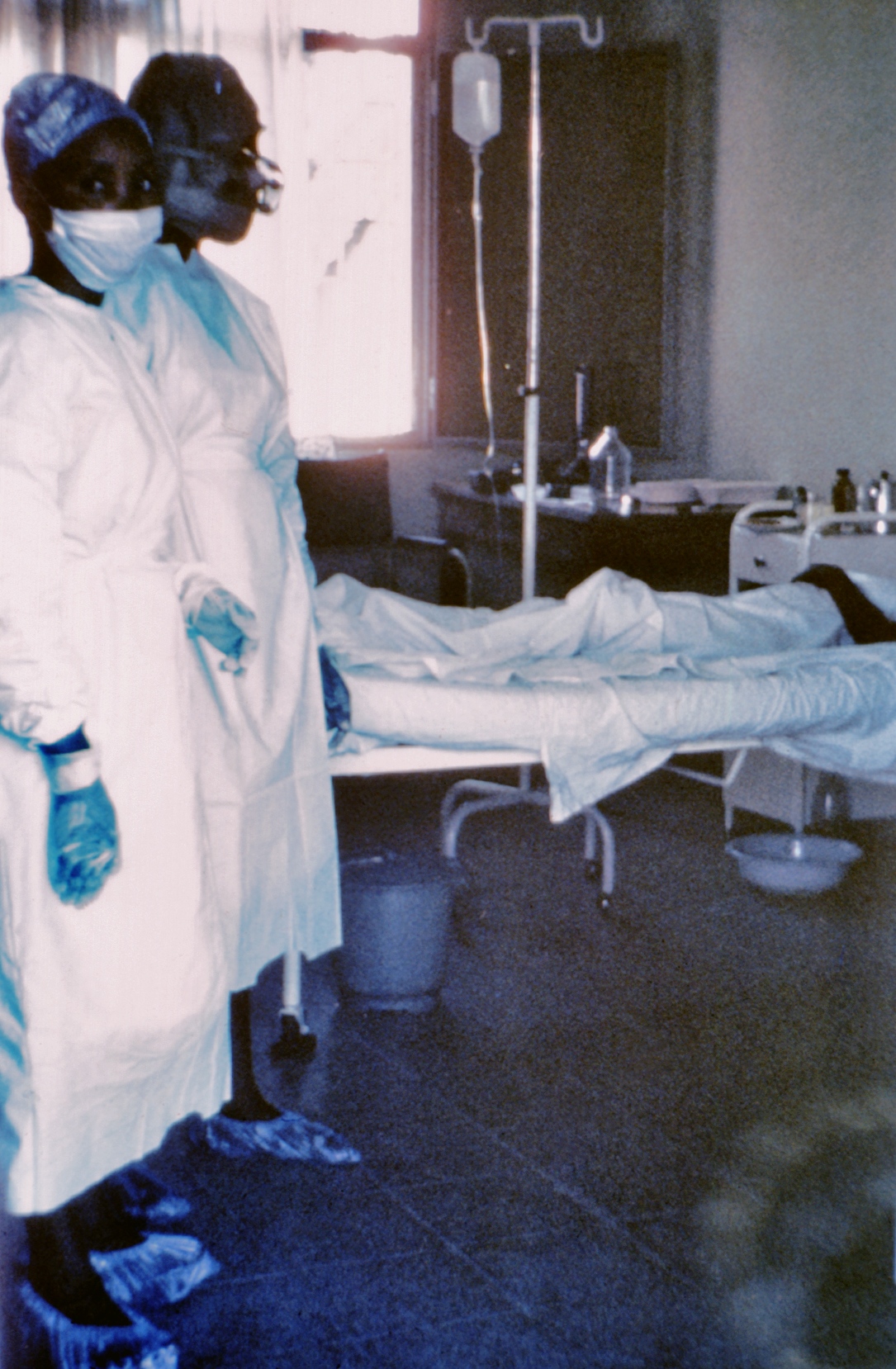
One hundred days after the declaration of the Ebola outbreak in the Democratic Republic of the Congo, the epidemic is growing at an exponential rate and is already spreading across territory larger than France, while the humanitarian response is not keeping pace, warned the UN Office for the Coordination of Humanitarian Affairs.
2,500 people have died in the past three months, said Julien Harneis, coordinator of the OCHA Ebola response from Bunia, in the eastern part of the country. Half of those deaths have occurred in the past 20 days, he added.
Harneis warned that the epidemic is unfolding in a region marked by three decades of conflict, with enormous humanitarian needs and a fragmented health system. In Ituri, the conflict has displaced one million people since 1999 and has weakened security and health structures. Cuts to aid in recent years have reduced the capacity of humanitarian workers by over 30%, he noted.
Conditions on the ground complicate the response. 160 health workers have contracted Ebola and 43 have died from the disease; others have been attacked. Over the past six months, more than 260 attacks against health workers have been recorded in the country and eight of them have died. In the past month, some of these incidents were specifically targeted at people participating in the Ebola response, mainly in mining communities and among groups of young men. Ambulances have been stoned or set on fire and movement through some areas is extremely difficult.
The fragility of the banking system and the existence of multiple overlapping health systems also hinder the response. The closure of commercial flights to Bunia at the beginning of the outbreak made it difficult to transfer money to local banks, and the lack of connectivity prevents widespread use of mobile banking, while cash payments pose security risks.
The UN is accelerating the response through five packages, led by the Congolese Government and bringing together UN agencies and non-governmental organisations. The goal is to strengthen community participation, improve surveillance, increase safe and dignified burials, and triple care capacity, from about 900 beds to 3,000 over the next three months. So far, 80 million dollars have been allocated for these operations, but these resources will be exhausted in the coming weeks.
"We urgently need greater investment and support from the international community," Harneis emphasised. He added that with more personnel and resources to reach remote areas, transmission could be slowed and stopped within months. Without that support, he warned, the outbreak could become more deadly and spread to neighbouring countries. For this reason, preparedness measures are being strengthened in South Sudan, the Central African Republic, Burundi and Uganda.
Vaccination is an additional tool, but not sufficient in itself. 50,000 doses of the Ebola vaccine have been provided to frontline workers and a clinical trial is planned to study whether it can offer protection against the Bundibugyo virus, said Christian Lindmeier, spokesman for the World Health Organization. However, the main tool remains community engagement and stopping the epidemic requires more workers, materials and resources.