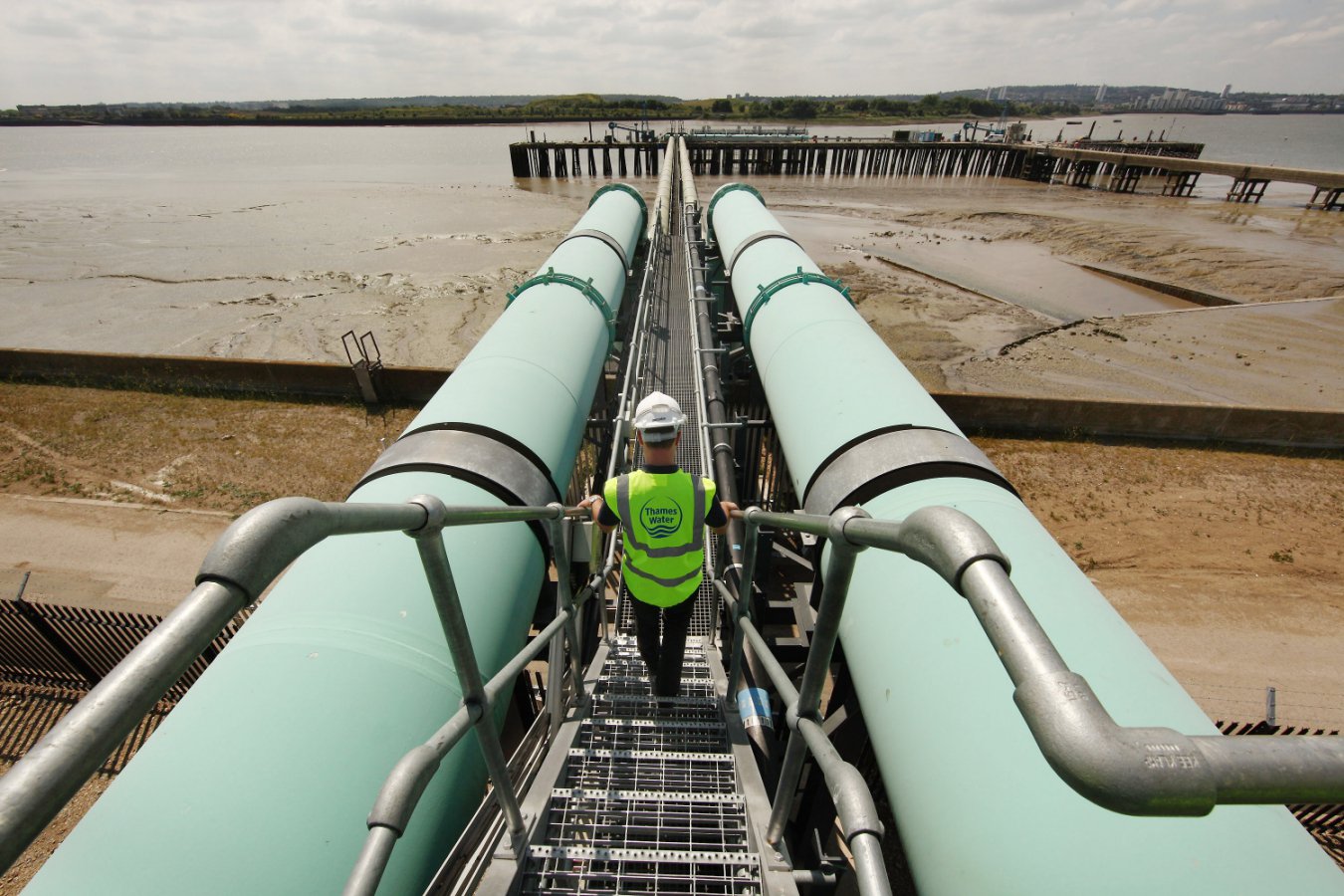
Water levels in the River Thames in London have fallen sufficiently to allow drinking water production from Britain's only large-scale desalination plant, but it is currently out of service.
The £250 million Thames Gateway desalination plant, located in Beckton, east London, opened in 2010 and remains the only large desalination plant in mainland Britain. It was designed to provide additional drinking water to the capital during periods of severe drought, transforming brackish water from the Thames into drinking water.
Despite the United Kingdom recording its driest July since records began in 1836 and government officials describing the drought as "exceptionally severe", the plant has not been used at all this year. According to Thames Water's drought plan, the company can begin using its desalination plant if a drought is declared and Thames flows fall below 3,000 megalitres per day. A drought was declared in England on 29 July 2026, and data obtained by New Scientist suggests that flows at Teddington, southwest London, the lowest point of the Thames's freshwater stretch, have been well below the 3,000 megalitres daily mark for weeks.
In fact, current flows are around 220 megalitres per day, even below the river's target flow threshold of 300 megalitres daily for Teddington agreed by Thames Water and the Environment Agency during the current drought. Normally, the river's target flow is 800 megalitres per day, to protect the river's ecology and surrounding environment from over-abstraction by Thames Water.
In normal circumstances, the current situation would allow Thames Water to begin producing drinking water from the Beckton plant, to ease pressure on other water sources. The Thames Gateway plant is capable of providing up to 100 megalitres per day of water, approximately 4 per cent of the daily volume of drinking water supplied by Thames Water. But the desalination plant has suffered technical problems and is currently out of service, according to Thames Water. Its 2027 drought plan published earlier this year reports that work is underway to replace damaged equipment, including the plant's membranes, which act as freshwater filters.
The plant has only operated five times, a report revealed last year, supplying the equivalent of seven days' worth of drinking water supply for London. It has not been used at all this year, despite the worsening drought. Thames Water's drought plan suggests that the plant would take between four and six weeks to reach its maximum capacity. A Thames Water spokesperson said the company was working to prepare the plant for operations later in the year. They said in a statement: "Preparations are underway at Thames Gateway Water Treatment Works in Beckton, east London, for it to become operational by the end of the year, if necessary, to help support reservoir recovery during winter. Any decision to use the desalination plant will depend on weather conditions, demand and reservoir levels in the coming weeks".
Data published by the Environment Agency this month confirmed that July 2026 was the driest July for the Thames area since records began in 1871, with the region receiving only 1 millimetre of rain throughout the month. Parts of the River Thames are experiencing exceptionally low flows, which can cause low oxygen levels and deterioration of river health.
Problems at the Beckton desalination plant come as other water companies seek to build desalination plants across England, in an attempt to secure water supplies as climate change brings more frequent and intense droughts to the country. Anglian Water is developing plans for two plants in Norfolk and Lincolnshire, using seawater from the North Sea. Meanwhile, South West Water is also drawing up plans for a desalination plant in Par, Cornwall, to help the county cope with rising water demand during the summer months.