A double earthquake struck the northern coast of Venezuela on 24 June 2026 at 18:04 local time, primarily affecting La Guaira, where the country's main port and capital Caracas are located. The earthquake also impacted Valencia and Morón in Carabobo state, as well as Boca de Aroa in Falcón state.
La Guaira, located 30 kilometres from Caracas and home to approximately 400,000 people, was declared a disaster zone by the Venezuelan Government. According to the World Bank, structural damage was estimated at 19,600 million dollars, with thousands of deaths recorded. Global news coverage overwhelmingly focused on the destruction of residential and tourist buildings in densely populated areas near Caracas and Maiquetía international airport.
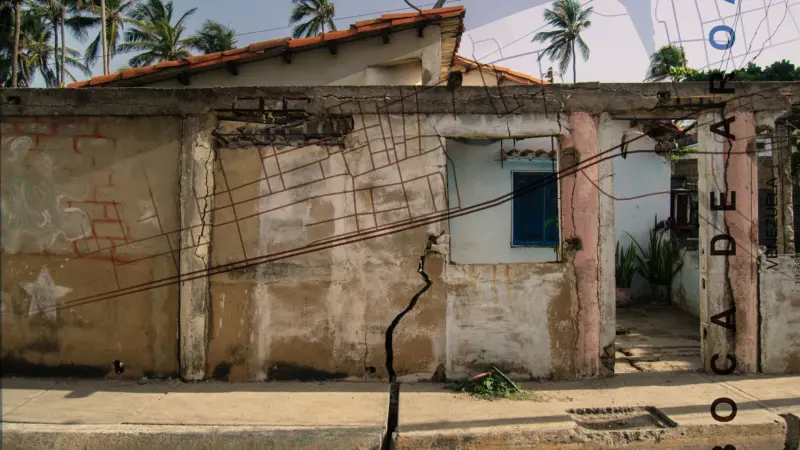
In Morón, located 21 kilometres east of the main epicentre, 60 families were affected, with 40 losing their homes entirely. Initial reports documented nine deaths in the area. In Boca de Aroa, on the eastern coastal strip, 87 houses were damaged and 252 people were displaced, with 128 homes declared uninhabitable. Initial reports also registered ground liquefaction, cracks and damage to electrical infrastructure.
Despite the devastation in these coastal communities, many affected people remained outside international public attention. A documentary project titled "The Earth's Sigh" compiled photographs, seismic records and testimonies from affected areas in Carabobo and Falcón to preserve visual memory of communities that lost media visibility.
Venezuela faces complex challenges in responding to natural disasters due to the housing crisis, internal migration and lack of building regulations. Venezuelan researchers and the Japanese Government warned in 2005 about seismic risks in Caracas, noting that 80 per cent of the population is concentrated in areas of maximum risk.