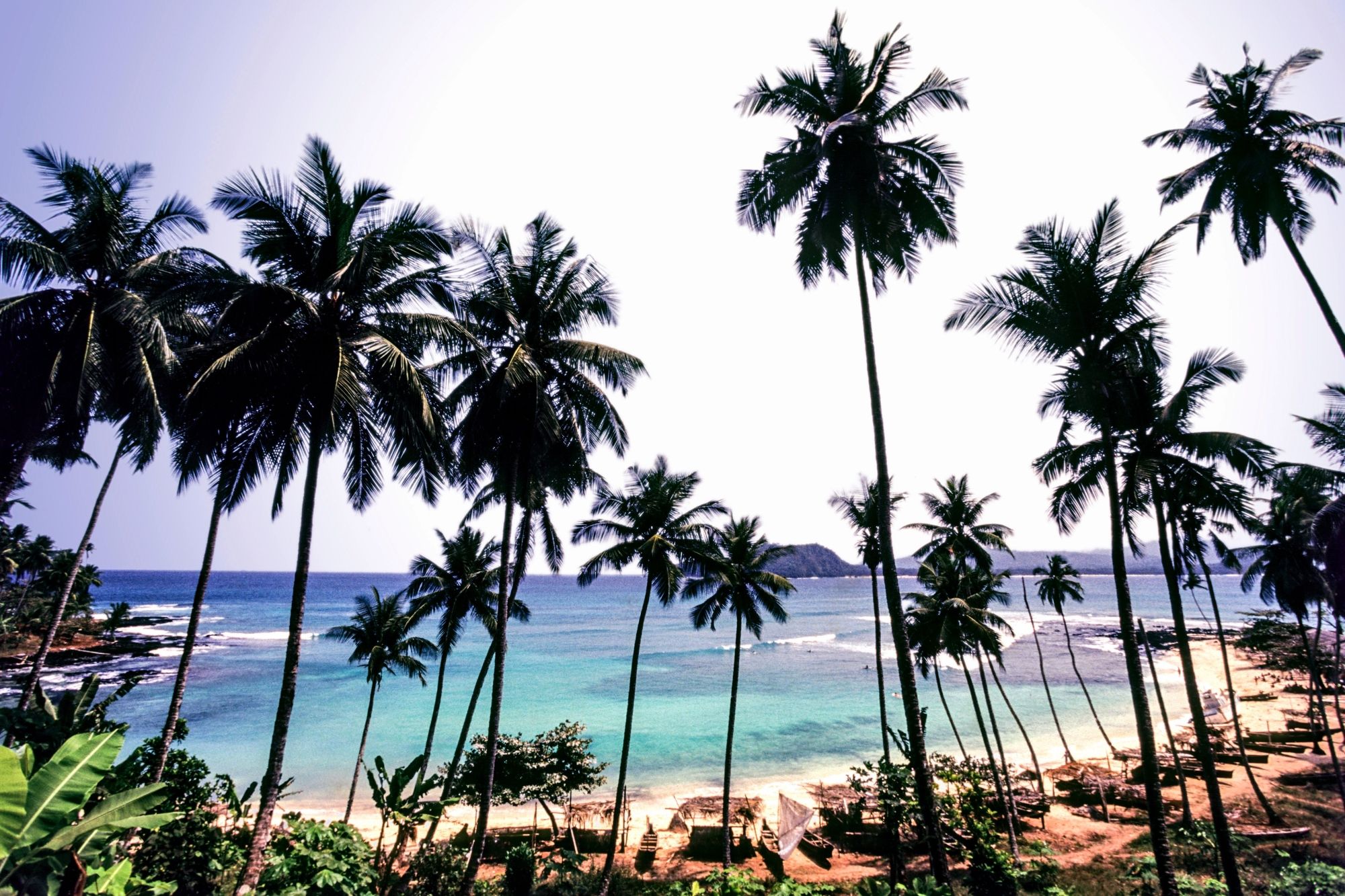
Santo Antão, an island in the Cape Verde archipelago, represents the most spectacular and least known face of the territory. Volcanic mountains covered in vegetation, deep ravines and small farming villages make the island one of the best African destinations for hiking.
Traditional paths connect villages where life has barely changed in decades. Terraced crops produce coffee, sugar cane, mangoes and papayas, while fishermen continue to work the Atlantic in small vessels.
One of the greatest pleasures is to finish a hike savouring cachupa, the national dish of Cape Verde, made with maize, beans and meat or fish, accompanied by a glass of grogue, the potent cane spirit produced artisanally on the island.
São Tomé and Príncipe, a tiny island nation in the Gulf of Guinea, remains one of tropical Africa's best-kept secrets. The main island combines lush rainforests, former colonial cacao plantations known as "roças", hidden waterfalls and beaches where few travellers venture. Nature enthusiasts find here opportunities to spot endemic birds, trek through primary forest or climb to the peak of Pico Cão Grande, an impressive volcanic needle rising from the jungle. Cacao's history is deeply embedded in local identity and many former estates allow visitors to learn the entire chocolate-making process, while local cuisine stands out for fresh fish, octopus, fruit bread, coffee grown on the island itself and artisanal chocolates.