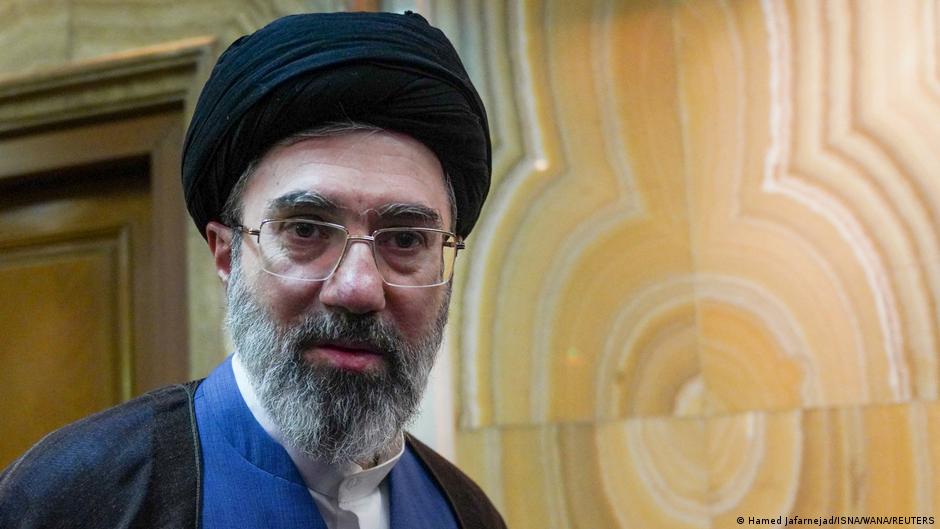
Mujtaba Jamenei made appointments on 9 and 10 August to fill several vacant posts, many of them left by officials killed during the war, according to reports. The appointees come from what is known as the "old guard", a group known for chronic hostility towards the United States.
Jamenei assumed control following the assassination of his father, Ali Jamenei, at the start of the war between the United States and Israel against Iran on 28 February. However, he has not yet appeared publicly, and doubts persist about his health and influence within the system.
Jason Brodsky, policy director at United Against Nuclear Iran, a US-based organisation, said the appointments "indicate the adoption of an approach more willing to take risks and confrontation". He added that "these appointments suggest that Iran believes it will remain in a state of war in the foreseeable future", noting that Jamenei brought back figures from the "old guard" in the Islamic Revolutionary Guard Corps.
The impact of these appointments on diplomatic negotiations with the United States remains to be seen, following a 60-day deadline to reach an agreement. Talks have been led so far by Mohammad Baqer Qalibaf, Speaker of Parliament, who is seen as less extremist.
Mohsen Rezaei, 71, who led the Islamic Revolutionary Guard Corps in the 1980s and 1990s, never stepped away from the front lines, and his stern face and black beard have remained familiar to Iranians through television screens. His attempts at politics were not successful, having run in several presidential elections without winning. For this reason, some observers were surprised by his sudden appointment to the top position previously held by Ali Lariyani, who was killed in the war. In April, Rezaei warned that Iran would sink US ships in the Strait of Hormuz if the United States decided to act as "police" in that vital maritime passage. In June, he threatened to respond to each US attack with a "rain" of missiles. A US decision to impose sanctions on him in 2020 cited suspicions that he was involved in an attack on a Jewish community centre in Argentina in 1994.
Hossein Taib, 63, a clergyman, was appointed leader of the "Organization for Mobilization of the Deprived" (Basij Forces), linked to the Islamic Revolutionary Guard Corps and known for enforcing security within Iran. He previously headed the intelligence apparatus of the Islamic Revolutionary Guard Corps for approximately a decade and a half, until he was abruptly replaced in June 2022. The reasons for his dismissal were not clear, but his departure coincided with the leak of details about an alleged plan to attack Israelis in Turkey. Taib has long been seen as close to Mujtaba Jamenei, and his appointment is viewed as an indication that the authorities are prepared to face any attempt to repeat the widespread protests that broke out last January. Brodsky said that "Taib's appointment reflects the concerns of the Iranian institution about the renewal of unrest amid the deterioration of the economic situation, with the Basij forces likely to play a central role in crushing any future protests".
Gholamali Vahidi previously served as Minister of Interior and Defence, and is the third commander-in-chief of the Iranian Islamic Revolutionary Guard Corps in less than a year, after his predecessor Mohamad Bakpur was killed on the first day of the war. Hossein Salami was killed during Israel's war against Iran, which lasted 12 days in June 2025. Possibly for this reason, Vahidi kept out of the spotlight during the war and did not appear publicly until the funeral ceremonies of Ali Jamenei in July. Although several written statements were issued in his name as commander of the Islamic Revolutionary Guard Corps, Mujtaba Jamenei's decree was the first explicit confirmation of his appointment. Following the 2022 protests, the United States imposed sanctions on Vahidi, saying he was responsible for "committing serious human rights violations".
Abdolrahim Abdolahi previously headed the central headquarters of "Khatam Al-Anbiya", a joint military command that coordinates operations between the various branches of Iran's armed forces. In his new post, he has the vital responsibility of coordinating between the regular armed forces and the Islamic Revolutionary Guard Corps. Abdolahi distinguished himself relatively during the war and warned in June that if the United States attacked Iran again, "it would receive a more severe response than before, and the fire of war would expand and extend to a greater reach, in addition to undermining regional security".