A nocturnal odyssey through the spectral streets of Tbilisi comes to life in "Secondary Role", the second feature from Georgian director and screenwriter Ana Urushadze. The film follows the heavy footsteps of Niaz (Dato Bakhtadze), a Georgian film star whose glory is behind him, in a surrealist and melancholic existential journey that evokes the cinema of Jim Jarmusch, though with the humour of the post-Soviet era. After winning the Special Jury Prize and the FIPRESCI prize in Rotterdam in January, the film now competes in the main section of the Sarajevo Film Festival.
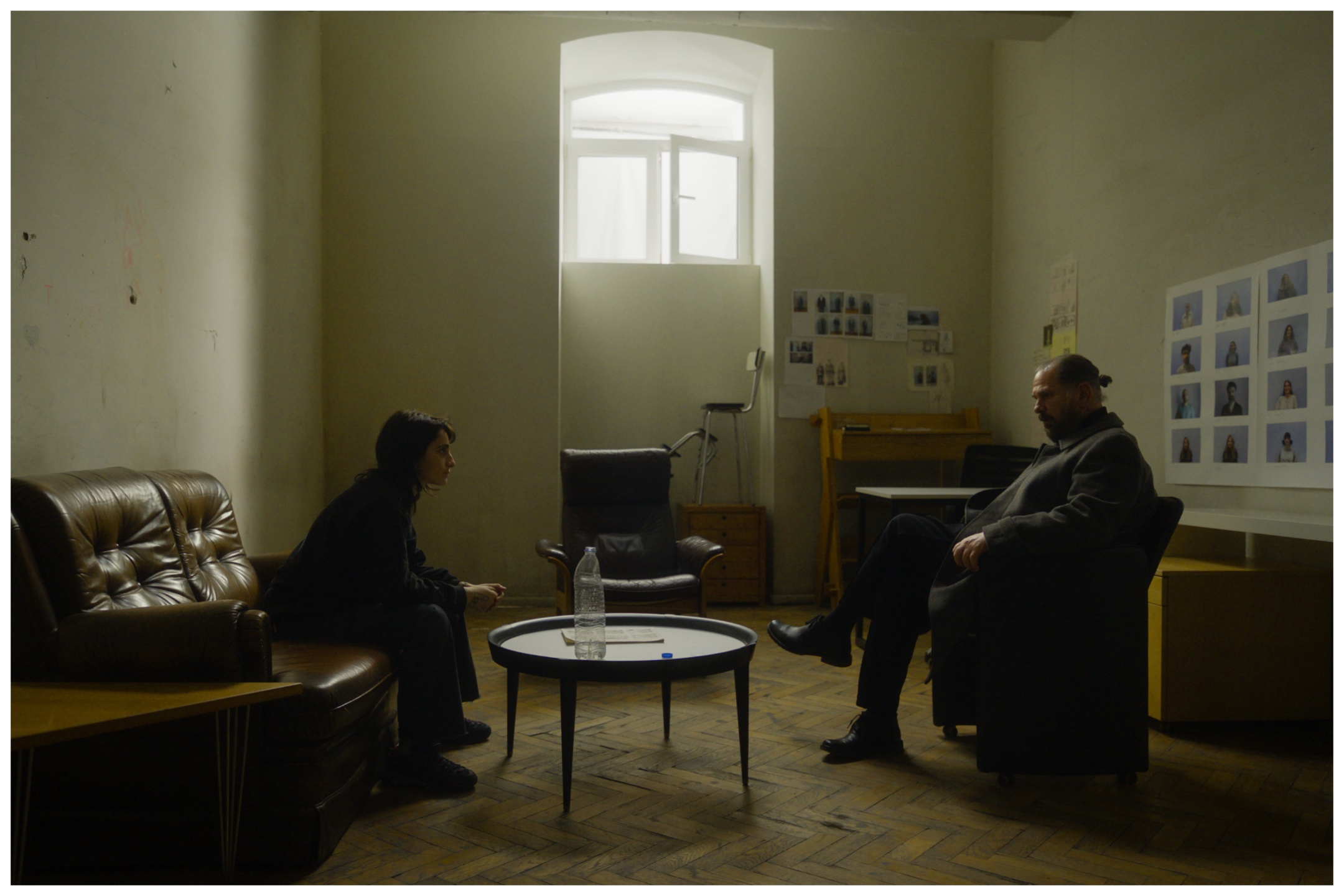
The film begins when Niaz arrives at an audition for an independent film directed by Aza (Elene Mausuradze), an androgynous director with the pallor of a Tim Burton extra. Unlike his previous roles in Hollywood films such as "Wanted" and "Extraction 2", where he played muscular men under the direction of male auteurs, Aza offers him a single-scene role as a tragic character with no script, only a hand-drawn storyboard. Niaz asks for three days to consider it, which triggers a period of existential searching that Bakhtadze performs with tremendous gravity.
The film accompanies Niaz as he wanders through the depopulated streets of Tbilisi, where he encounters characters from his past, admirers and eccentrics who drag him into their homes and vehicles as quickly as he leaves them. Among them is an Armenian couple with whom he goes to a hot spring, exes including a makeup artist of impressive stature and a veiled actress, and colleagues who attend the wake of a veteran critic whose last unpublished work is an exhaustive study of Niaz's career. The film runs 139 minutes, a length that immerses the viewer in a dreamlike atmosphere.
Urushadze employs surrealism with delicacy: a special herb that Niaz picks from the roadside reappears when he empties his pockets during a tender encounter with his former partner; a doodle drawn on a fogged window resurfaces as an episode of déjà vu. Aza, an avatar of Urushadze based on her experience directing her debut "Scary Mother" — which won the Best First Feature award at Locarno in 2017 — justifies the lack of a script by saying that the visual is what matters most. Urushadze complements the dark nocturnal landscape of Tbilisi with bursts of jewel tones: a turquoise bird, a room bathed in purple light, a bone-white body on midnight-blue sheets.
Unkempt and brutal, Niaz is received by his colleagues with caution and surprise, his star dimmed by what is strongly suggested was his own fault. Yet the role Aza proposes for him triggers in Niaz a mourning for the death of his career, but also forces him to consider a new act and the necessity of change in a world that is beginning to abandon its tolerance for the whims of male genius. Obsessed with the secondary role, Niaz desperately seeks a way to enter the character, an effort that demands of him a softness and vulnerability that he had denied both on screen and off it. A tender encounter with his estranged son crystallises the film's ideas about the blurred boundary between acting and real life; we are who we perform and those characters can transform us, a notion that in Urushadze's hands comes laden with hope.