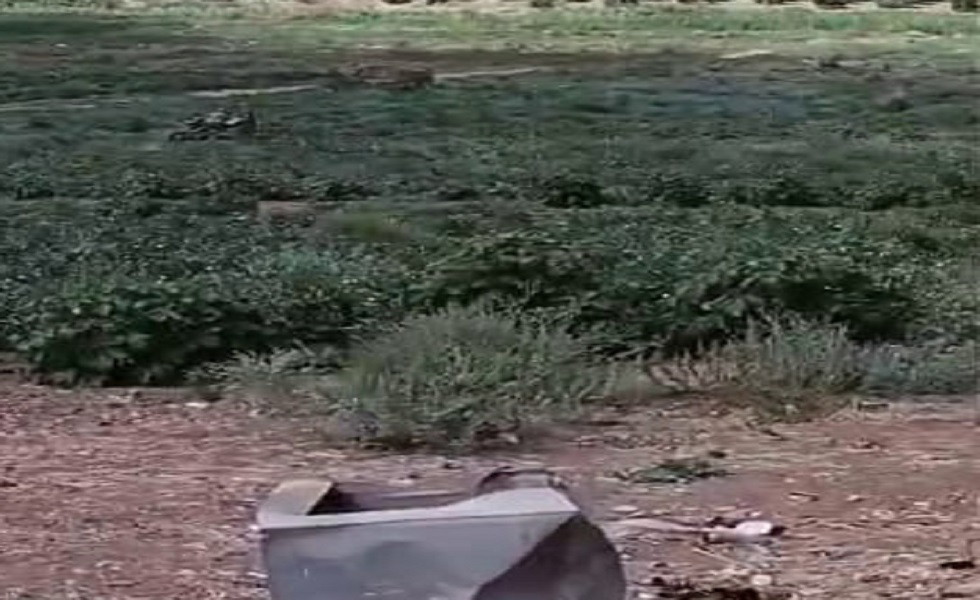
Syrian agricultural authorities destroyed crops that had been irrigated with wastewater in Daraa province, according to Syrian state news agency SANA. The authorities also confiscated pumps and motors used to extract water from sewage systems.
The Daraa Department of Agriculture carried out the operation last Monday in the Wadi region, in the Al Daheya neighbourhood, according to SANA. The authorities proceeded to draw up violation reports against those responsible whilst carrying out an awareness campaign for farmers on the risks of using wastewater for crop irrigation, as part of a campaign intended to prevent contaminated products reaching consumers.
The agency did not specify the type of crops destroyed, the extent of cultivated land, or whether the farmers had harvested quantities of them or whether any of these products had reached the markets before the campaign was carried out.
According to Muhammad Khair Aba Zaid, deputy director of the Department of Agriculture in Daraa, the department destroys non-compliant crops and confiscates motors used to extract wastewater "in accordance with legal provisions". Aba Zaid noted that this practice poses great risks to humans and animals. The procedures are not limited to crop destruction and pump confiscation, but also include farmer awareness-raising and warnings with possible more severe penalties in case of recidivism.
The campaign follows a circular issued by Daraa province in April of last year that required local, agricultural and environmental authorities to intensify surveillance of irrigation water sources and destroy crops irrigated with contaminated water as soon as they were discovered. The circular also ordered the confiscation of machinery and equipment used to sell them in favour of the state treasury and the initiation of legal proceedings against those responsible in accordance with legislative decree number 59 of 2005 and its amendments.
Syrian legislation establishes the immediate destruction of vegetables and crops irrigated with contaminated water, in addition to the imposition of fines for infractions related to the agricultural production plan. Medical sources in Daraa have not linked cases of intestinal inflammation and health complaints affecting mainly children to the destroyed crops, nor has the Daraa Department of Health announced the registration of cases of diseases caused by their consumption. However, according to a joint report by the World Health Organisation and the United Nations Food and Agriculture Organisation, water used to grow fruits and vegetables can carry pathogens even after treatment, which requires inspecting the water source, assessing risks and implementing measures to prevent the transfer of contaminants to food products.