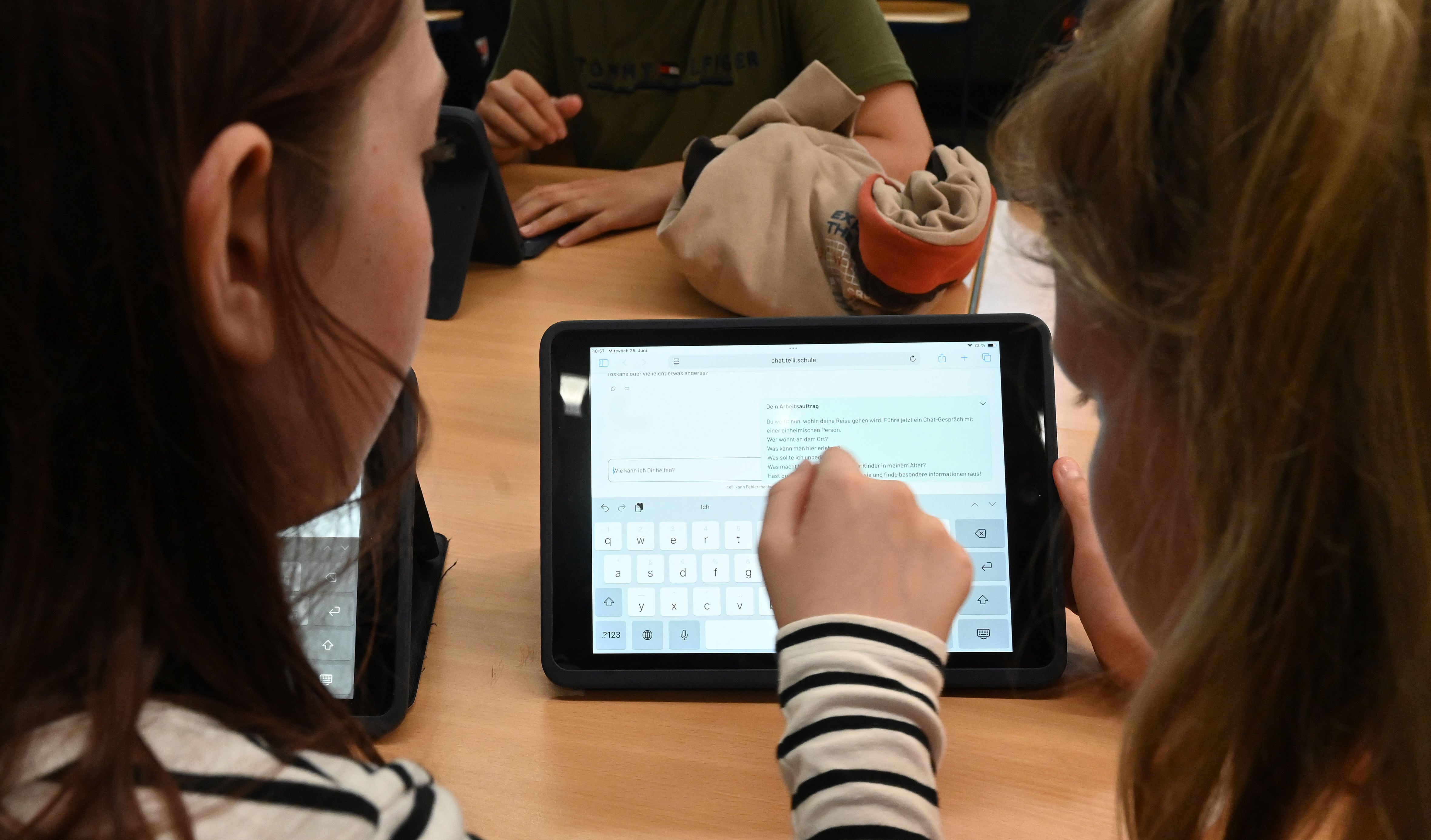
A study conducted with more than 700 secondary school students found that the gender gap also extends to artificial intelligence learning. The researchers discovered that teenage girls achieved lower grades than their male classmates, a pattern attributed to cultural factors.
The team identified that teenage girls in artificial intelligence courses had less confidence in their ability to learn the tool. According to the authors, this lack of self-efficacy directly influenced their academic performance.
Zubair Ahmad, director of the study, indicated that the inequality is rooted in the scarcity of female role models in technology. "The role model for women is much smaller in technology, especially in artificial intelligence," Ahmad said. This lack of visibility affects how students perceive themselves in these fields, resulting in lower participation and even course dropout.
Although the research was conducted in Qatar, the sample included students of multiple nationalities from Asia, Africa, the Middle East and Europe. Ahmad explained that "this is a general perception" that does not belong to a single region.
According to the annual 2025 Gender Digital Gap report by Red.es, only 17.5% of the workforce employed in STEM disciplines in Spain in 2023 were women, placing the country slightly above the European average of 17.4%.
Estefanía Hita, an expert in educational technologies who did not participate in the study, noted that the problem begins before students encounter these tools. "We are not talking about a gender gap as a matter of ability, but as a trajectory," she explained. According to Hita, many teenage girls come to technology with less confidence, fewer role models and fewer experiences.
To reverse this situation, Hita proposes an educational approach based on practical experience. "When a student creates an artificial intelligence tool and understands what they are doing, receives support, can make mistakes and improve," she said.
Ahmad also believes that the solution requires rethinking how technology is taught in classrooms, taking into account psychological and social factors. The researcher emphasised the need to create environments where female students develop confidence without comparisons or barriers. "The way students learn can only be inclusive or equitable if we can change the pedagogical model," he stated.
An earlier 2024 Red.es report documented additional disparities in digital confidence. 40.7% of women said they had little or no trust in the digital environment, compared with 37.7% of men. In cybersecurity, only 25.7% of women felt fairly or very well prepared to face Internet security problems, compared to 38.7% of men. The report also noted that 67.8% of victims of sexual crimes committed on the Internet were women.
Faced with emerging risks associated with artificial intelligence, such as the creation of sexualised images of minors, Hita advocates for a balanced approach. "It is not just a matter of viewing it as a threat," she explained, "it can also improve the way we learn and work".
Experts warn that failing to address this gap could have significant consequences. If female students perceive that artificial intelligence "is not their field," Hita said, they are likely to avoid related activities. "In the end it is a tool. What we need to do is teach it responsibly," she stated.