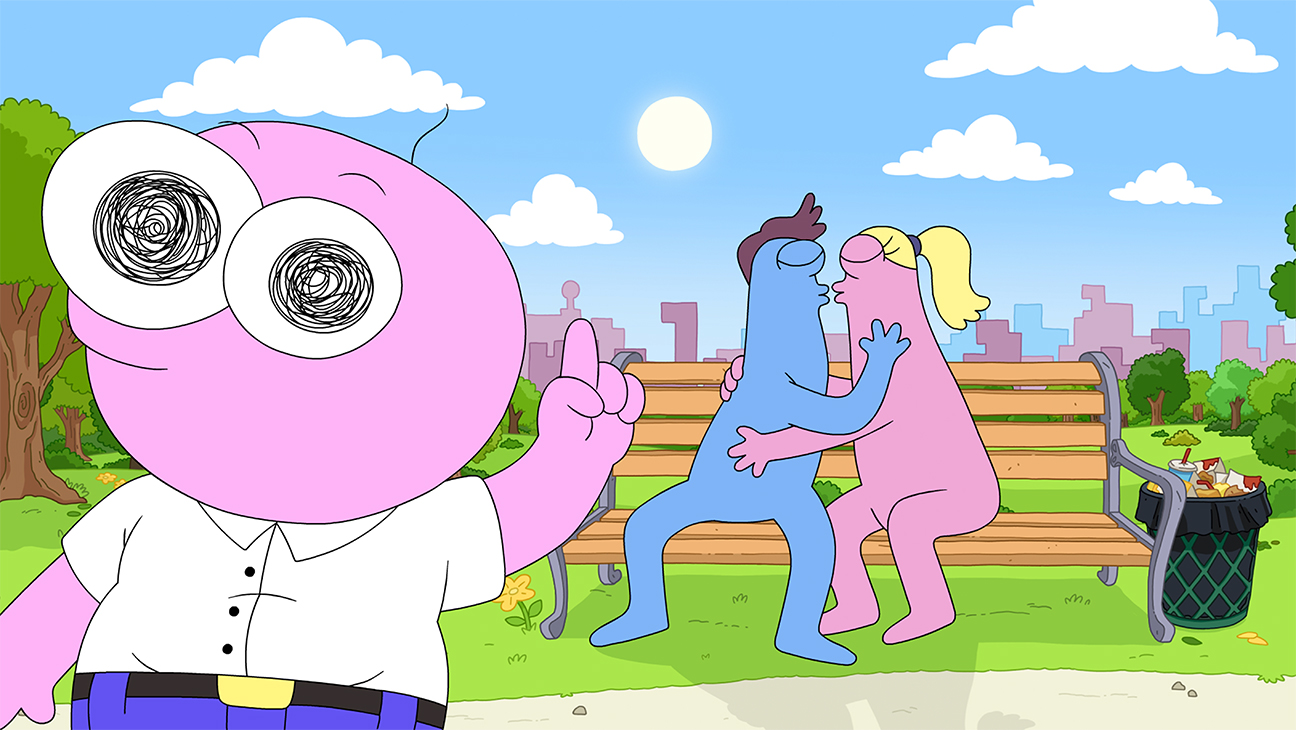
Smiling Friends is saying goodbye on a high note. Since its launch in 2022, the absurdist animated series has built a devoted Gen Z fanbase obsessed with the adventures of Pim and Charlie as they attempt to spread happiness. Though Adult Swim had renewed Smiling Friends for two more seasons, creators Michael Cusack, who voices Pim, and Zach Hadel, who plays Charlie, announced in February that they were "burnt out" and would abruptly end the series with the already-aired third season.
Fans had reason to smile when the show received a Primetime Emmy nomination for Outstanding Animated Program, in its first nomination and competing against classics such as The Simpsons and South Park. Hadel, 33, and Australian-born Cusack, 35, explained that they took new risks in the third season and cast a star from The Office without having watched the series.
Creed Bratton, a former cast member of The Office, congratulated the series team on the nomination on Instagram. Hadel explained that Aron Fromm, the series' editor and composer, recommended Bratton, whom he knows personally, to play the live-action father of Mr. Frog in green paint. "Neither Michael nor I have seen The Office," Hadel noted, though he acknowledged looking up clips of Bratton after the recommendation. "It's pretty funny," he said of the actor's performance.
Smiling Friends had been renewed for two more seasons before the creators decided to close the series. Cusack explained that both creators felt "empty" at the end of the third season. "We knew it was the right thing to end it there. We thought about it and a week or two later we said: 'We can't continue feeling like this, so let's just end it'," he said. Hadel clarified that the misconception is that they were "creatively burnt out" or out of ideas. "We have a Google Doc full of a bunch of ideas, but we wouldn't have been happy making it," he noted, adding that the series would have "lost its spark".
When asked about the probability of more episodes, Hadel responded that it "is not low" and "is not 90 per cent". Cusack suggested the probability could be somewhere between 25 and 30 per cent, but Hadel clarified it varies from day to day. "Some days it's 60. Some days it's 80. Some days it's 20. It really changes day to day. But it's not zero," he concluded.