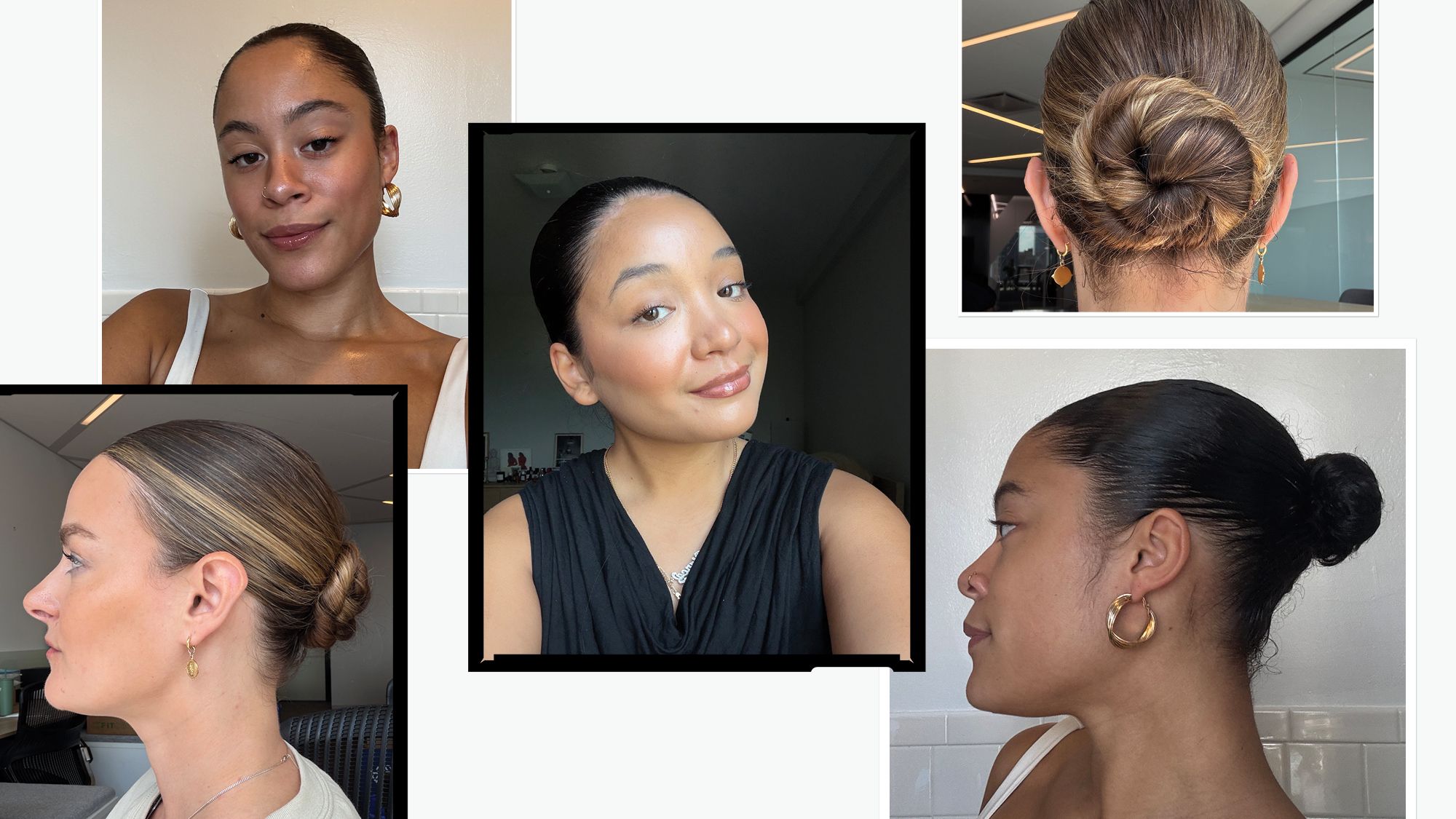
A slicked-back bun seems simple in theory: you pull your hair back to the nape of the neck and twist it into a knot. In practice, users often find themselves staring at the mirror half an hour past their intended departure time with a mysterious bulge and numerous loose hairs. The point of the hairstyle is for each strand to look intentionally in place, which can turn the process into a test of patience and physical endurance.
Despite the frustrations inherent in creating one, a truly smooth bun does not require growing a third arm or ruthlessly pulling your hair. The right styling products and proper tools do most of the work. Experts interviewed, including professional stylists and Allure editors who regularly wear this hairstyle, explained what sets a sleek, polished bun apart from a messy, unmanageable bump. The professionals break down exactly which products to use at each step, with tips tailored to different hair types.
For best results, you cannot start by directly pulling your hair back. Stylist Chris Russell recommends first applying a thermal protective spray, then blow-drying your hair. He then suggests running a thermal brush through your hair, ensuring "uniform texture, controlled shine and a flawless finish before pulling it back".
The professionals consulted do not all use heat tools after blow-drying. Sophie Panych, content director whose hair is naturally fine and straight, occasionally touches up details with a flat iron. Bianca Richards, social media manager, says she uses a thermal brush for added smoothness after blow-drying her naturally wavy and thick hair. Hailey Roy, production assistant who has 3C curls, actually avoids heat tools completely. "I've always done slicked-back buns with my natural hair," she says, adding that she tries to keep her strands away from heat.