Adhesives used in wigs and extensions are a common triggering factor that requires attention, along with the tapes and glues used in some attachment or application methods. Dermatologists recommend identifying these factors to avoid flare-ups.
Common dandruff and a more inflamed outbreak of seborrheic dermatitis are not always easy to distinguish, but the timeline can serve as an indicator. According to Dr. Negbenebor's recommendation, a medicated pharmacy shampoo such as Head & Shoulders should begin to resolve ordinary dandruff within several days to a week. If this does not happen or if there is inflammation, thick crusting, cracking or bleeding, it is a sign that this is more than mild dandruff and it is time to consult a dermatologist rather than continue trying to resolve the problem on your own.
This is not the time to wait. Dr. Downie has observed that delayed treatment allows mild eczema to spread and intensify, becoming more uncomfortable, painful and disrupting daily life. Although each case is unique, dermatologists tend to start with certain treatments.
For patients who need active treatment, Dr. Woolery-Lloyd's first recommendation during a flare-up is a topical non-steroidal anti-inflammatory, a newer class of prescription medication that soothes irritation without the risks of skin thinning that come with steroids with prolonged use. When someone experiences a scalp flare-up, she prefers a light foam formula with no alcohol that works on different hair types and textures without weighing it down or altering the hairstyle.
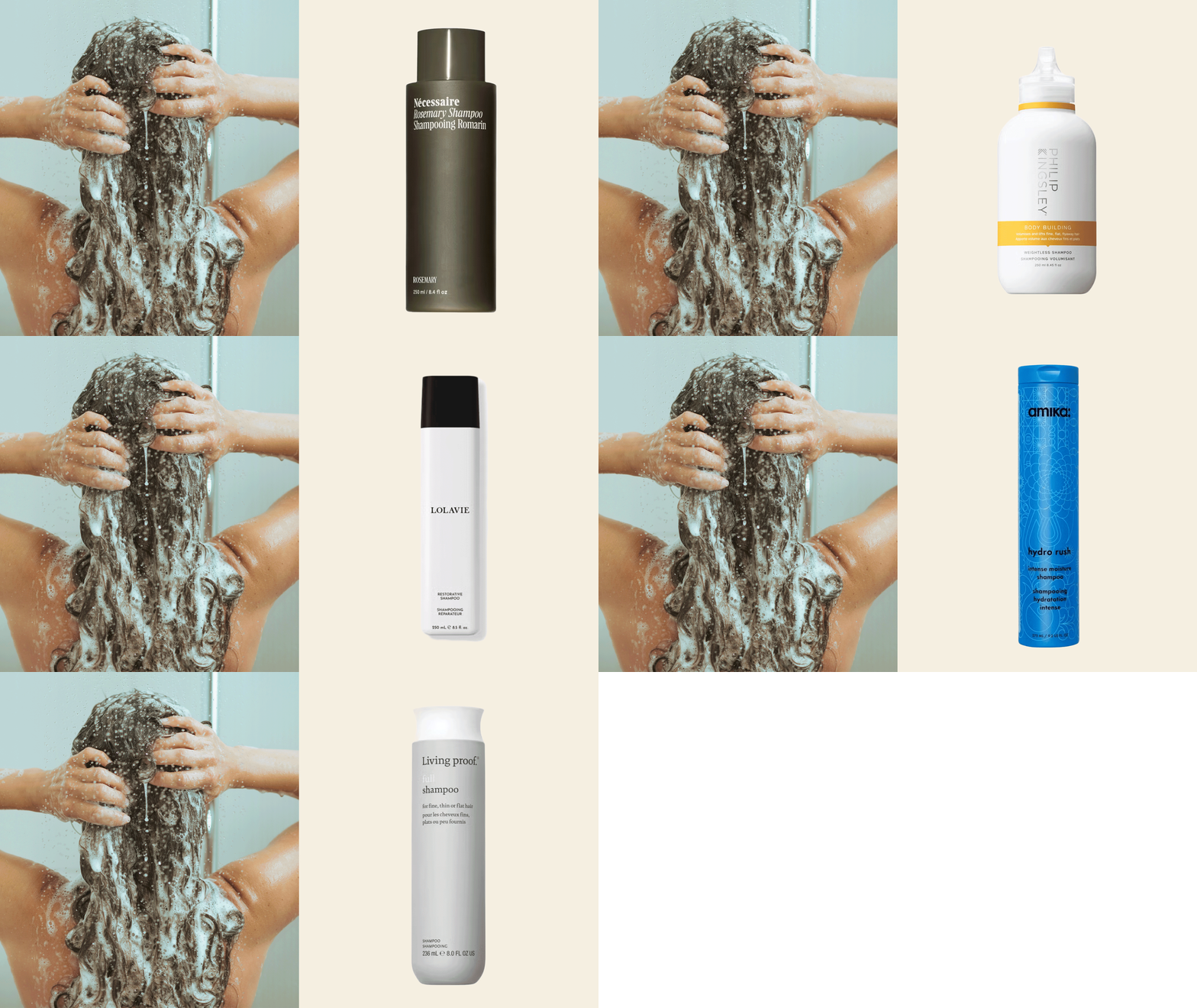
Special shampoos, available both over-the-counter and by prescription, contain active ingredients to combat flaking and inflammation related to eczema. They can be especially useful if you have seborrheic dermatitis, since many contain antifungals that stop yeast growth. Your dermatologist can recommend which to try, but some pharmacy options include ketoconazole (found in Nizoral Anti-Dandruff), selenium sulphide (Selsun Blue), salicylic acid (Ouai Anti-Dandruff Shampoo), zinc pyrithione (active ingredient in most Head & Shoulders formulas) and coal tar (MG217 Therapeutic Shampoo).
Be sure to talk to your doctor about the best way to use these shampoos with your hairstyle. For example, when people maintain their hair in protective styles that cover the scalp such as braids and twists for weeks, Dr. Negbenebor suggests applying a medicated treatment shampoo directly to separate sections, massaging, leaving to sit for five minutes and then rinsing with water.
This applies to everyone with scalp eczema, but especially to those with contact dermatitis: dermatologists commonly recommend simplifying your routine, using fewer products overall and changing products less frequently, as this makes it easier to identify what might trigger a flare-up. Look for hypoallergenic and fragrance-free options that have the National Eczema Association Seal of Acceptance. Research shows that many products labelled as "hypoallergenic" or "fragrance-free" that have not been endorsed by the organization do not always live up to their claims.
It is not just what is applied to the scalp that matters. Intestinal inflammation can worsen skin inflammation, and some research suggests that an anti-inflammatory eating pattern, which includes probiotic foods such as yoghurt and kimchi and limits highly processed foods and those rich in sugar, can also support skin health. Some dermatologists also recommend a probiotic supplement as a simple addition to an eczema management routine, along with topical treatment.
Whilst treating active eczema can do much to provide relief, there are also measures that can be taken to help prevent flare-ups in the first place. In addition to avoiding known triggering factors, there are other steps that can be followed.