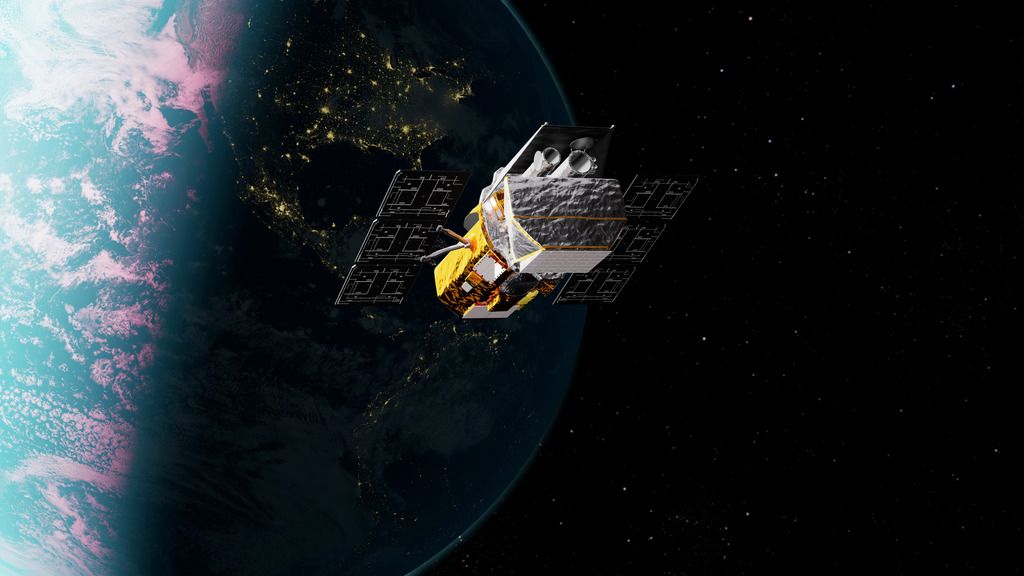
NASA has canceled its attempt to rescue the Swift space observatory from decaying orbit after a robotic spacecraft developed to perform the rescue suffered critical failures. The LINK spacecraft, launched on July 3, 2026, encountered problems with its attitude control system shortly after reaching space, and engineers were unable to restore full functionality.
Swift, which has operated continuously since 2004 studying gamma-ray bursts, was not designed to be captured or repaired in orbit. The 20-year-old observatory has gradually lost altitude due to atmospheric drag at its orbital altitude, a process that accelerated during 2024 when increased solar activity heated the upper atmosphere. NASA officials estimated that without intervention, Swift would reenter the atmosphere before the end of 2026.
In response, NASA contracted with Katalyst Space Technologies to develop and launch the LINK spacecraft, which was to capture Swift and boost it to a higher orbit. NASA administrator Jared Isaacman said in a statement that while the mission outcome was not as intended, the agency viewed the attempt as worthwhile. "The team moved with extraordinary speed to give Swift a chance to carry out more science while advancing capabilities America will need for satellite servicing in the future," Isaacman said.
LINK will continue to approach Swift to conduct rendezvous demonstrations and gather data on navigation and close-proximity operations that can inform future satellite servicing missions. Without intervention to raise its orbit, Swift will eventually descend into denser atmospheric layers where heating and aerodynamic forces will destroy most of the observatory. NASA estimates Swift will likely reenter the atmosphere before the end of the year.