Artificial intelligence has designed viruses capable of infecting bacteria and reproducing, an unprecedented achievement that demonstrates that AI can do more than analyse the genetic code of living beings. It can also write new versions of that code, researchers said.
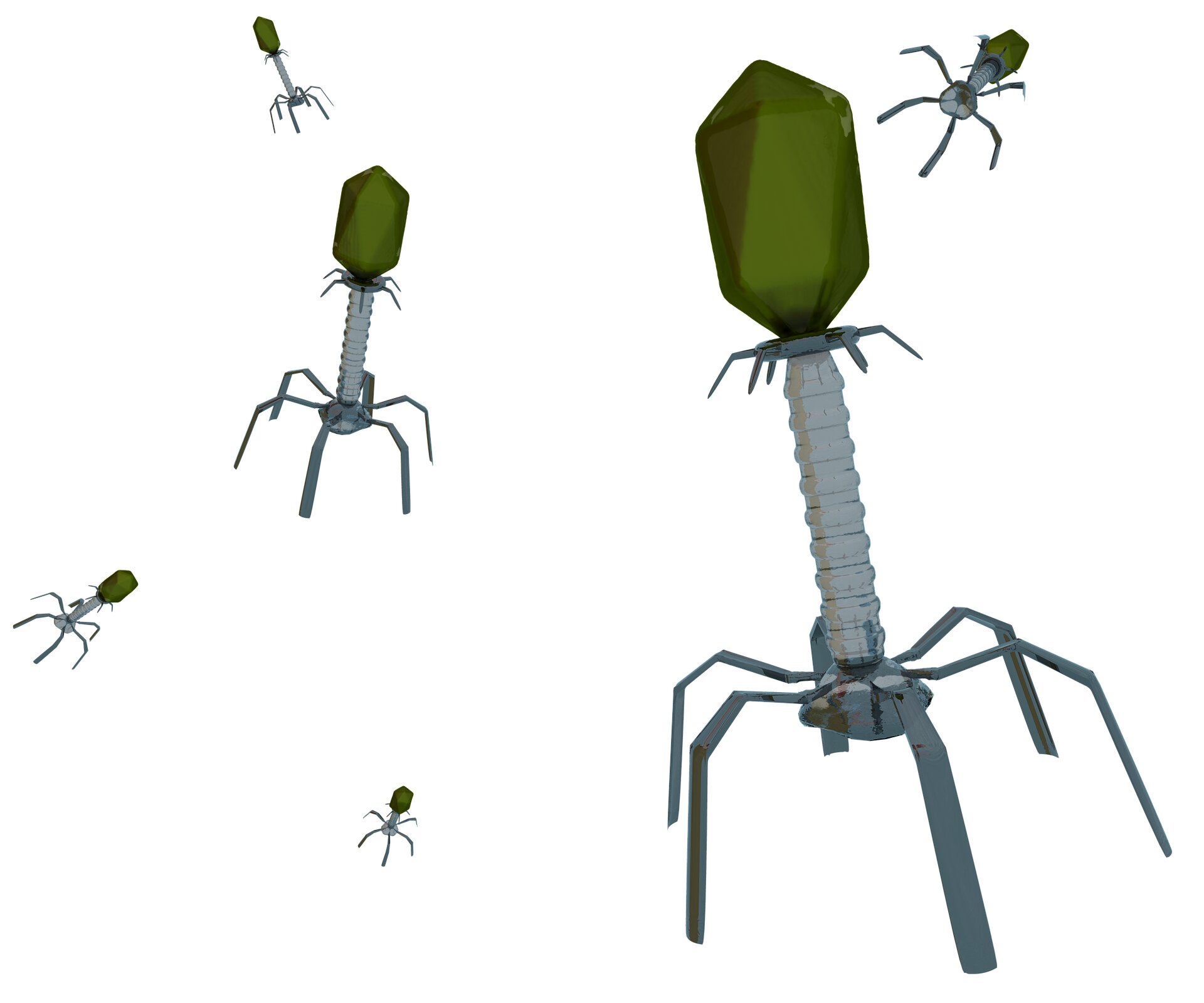
The viruses in question are bacteriophages or phages, that is, viruses that infect bacteria rather than people, animals or plants. Researchers used AI to design hundreds of new versions of a widely studied phage and then built the viruses from scratch in the laboratory. Of the 285 genomes designed by AI that the team tested, 16 produced functional phages capable of infecting the bacterium E. coli.
The result represents an important step for a field sometimes called generative biology, in which AI is used to design new biological molecules and organisms. However, it is important to understand what the researchers have demonstrated and what they have not.
The AI systems used in the study, called Evo 1 and Evo 2, are designed to work with genetic sequences in a similar way to how large language models, such as ChatGPT, work with text. A language model learns patterns in words and sentences, while a genome model learns patterns in DNA sequences.
The researchers trained their AI models with more than 2 million phage genomes. They then asked them to design new versions of a small, widely studied phage called ΦX174. The team also fine-tuned the models using genomes of approximately 15,000 close relatives of ΦX174. Therefore, the AI was not inventing a virus from nothing, but rather using patterns found in existing biology to generate new combinations within a system that scientists already understand relatively well.
The team chemically synthesised the DNA sequences and introduced them into E. coli to see if they could produce functional phages. Most did not work, but 16 of the 285 designs did. Some of the resulting phages behaved in ways broadly comparable to ΦX174, despite having substantially different DNA sequences.
The researchers also explored whether the new phages could overcome bacterial resistance. They exposed the AI-generated phages to a variant of E. coli that was resistant to the original phage. After repeated rounds of exposure, hybrid phages emerged that were capable of infecting the previously resistant bacteria. The AI had not directly designed these final phages, but had generated an initial diverse population, giving evolution more possibilities to work with.
This approach could prove useful in fighting antibiotic resistance. Bacteria are developing increasing resistance to antibiotics, making some infections difficult or impossible to treat. Phages have been investigated for years as an alternative because they can attack and kill bacteria, adapt to combat phage resistance and leave human cells unharmed.
The challenge lies in finding the right phage for the correct bacterial infection. AI could eventually help researchers predict which phages are most likely to work against particular drug-resistant bacteria. However, there is a considerable gap between designing a phage on a computer and using it to treat a patient.
Any potential treatment would first have to be tested against the types of bacteria that cause infections in patients to ensure it works and is safe. Then it would have to be manufactured according to the high standards required for medicines. Additionally, the phage used in this study is unusually simple. Many phages that could be useful against serious infections have much larger genomes and contain biological machinery that scientists do not yet fully understand.
The study is better considered as a demonstration of what could be possible than as the arrival of AI-designed phage therapy. It is also a reminder of how useful phages have been to biology. Scientists have studied them for decades to understand the fundamentals of genetics and how cells work. Now they are giving researchers a way to test whether AI can do more than interpret existing DNA: can it design a complete genome that actually works?