Webb's mysterious red dots could be hiding entire galaxies

Astronomers discovered that the mysterious red dots of the early universe could be complete spiral galaxies whose structure becomes invisible when observed from very far away.

Por El Medio Oriente
18 de agosto de 2026
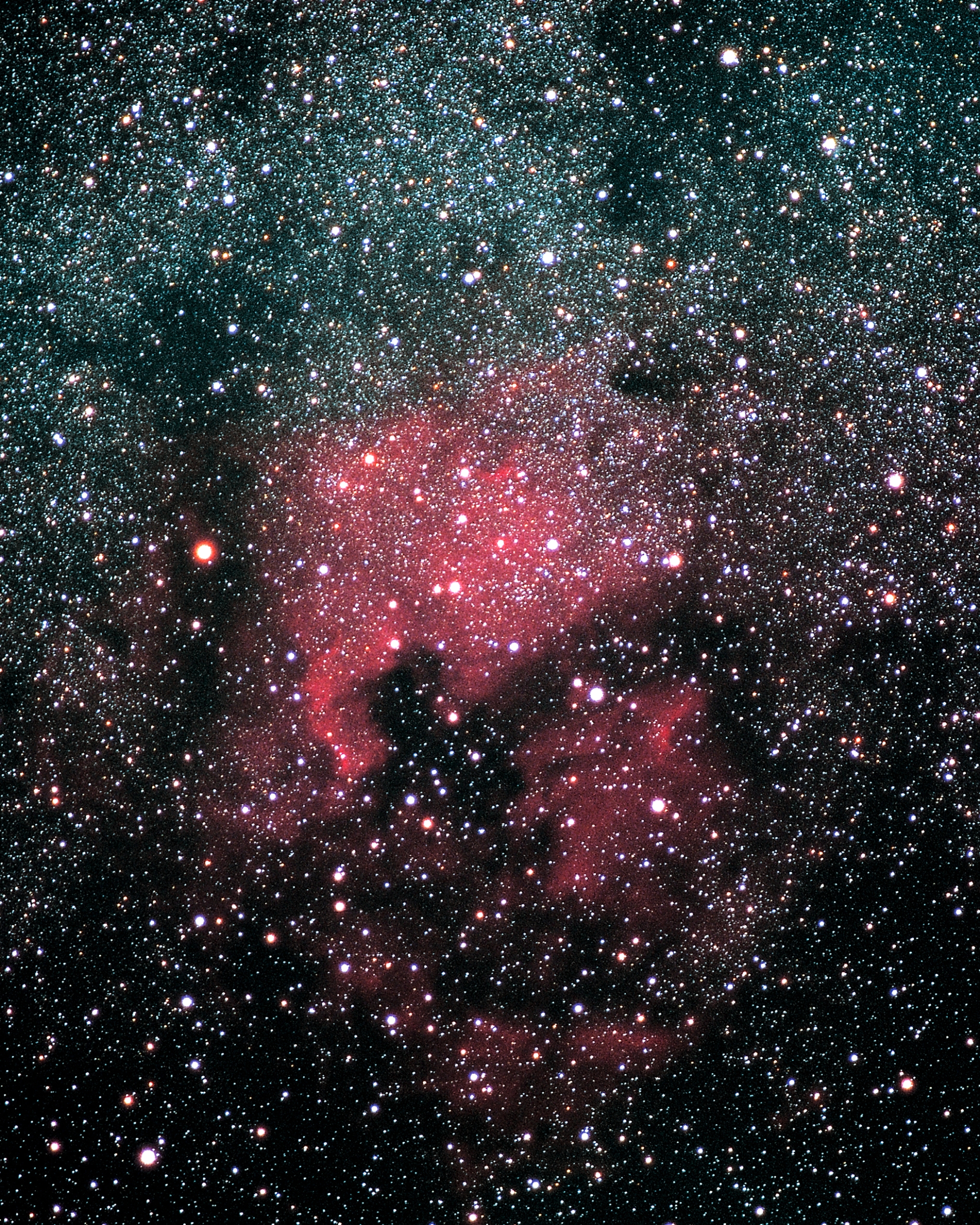
A deep space region filled with stars of different colours against a black background, with a red and pink nebula in the centre containing multiple clusters of bright stars.
Illustration. An astronomical image showing a young star cluster surrounded by countless stars. Astronomers use images like this of deep space to study distant galaxies and cosmic structures that can become invisible when observed from extreme distances. (Foto: Lviatour / Wikimedia Commons (CC BY-SA 3.0))
1 min de lectura
Tamaño del texto

Astronomers may be close to solving the mystery of the enigmatic "little red dots" that populated the ancient universe. When studying a spiral galaxy nicknamed the "Saguaro", researchers found a compact, bright red core that closely resembles these distant objects, but with something Webb typically cannot see around it: an entire galaxy.

When the team simulated how the Saguaro would look from a much greater distance, its spiral structure essentially disappeared, leaving only the bright red core visible. The findings suggest that the mysterious red dots observed in the early universe could be complete spiral galaxies whose overall structure is too faint to be detected at those extreme distances.
Webb's mysterious red dots could be hiding galaxies | El Medio Oriente