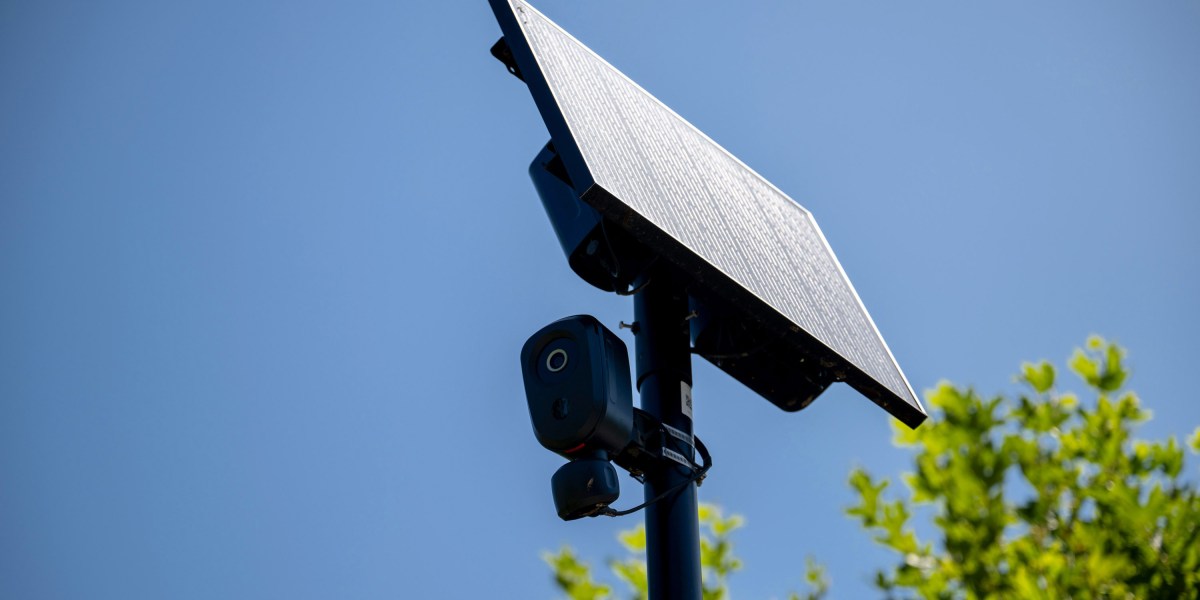
Flock, the police technology giant known for its network of approximately 120,000 automatic vehicle licence plate readers across the United States, announced changes to its platform last week. The updates are designed to prevent officers from using the platform for illegal or illegitimate purposes, including harassment of individuals.
The Washington Post recently identified 50 cases in which officers abused Flock and its competitors' systems, frequently to harass and intimidate women. According to reports, one woman in Wisconsin alleged that her ex-boyfriend, a police officer, searched her vehicle 179 times. Another woman was harassed by a police chief with no one to report it to.
Flock responded with practices designed to ensure that officers have legitimate cause for each search, including software to flag unusual searches and requiring searchers to enter a criminal case number. However, the changes have major loopholes. Officers can enter fake case numbers, just as they have lied to circumvent other Flock security measures. The policies also do not address broader concerns from civil liberties and privacy groups that warn Flock is turning a tool sold as a crime-fighting device into a mass surveillance network.
These criticisms have generated growing backlash that has already led some cities to cancel contracts and some states to attempt to pass laws to limit or prohibit licence plate readers altogether. In this context, there have been several arguments defending Flock: if these cameras help solve crimes, what is the problem? At best they could help capture a kidnapper, and if not, they are just taking pictures of my car that no one will bother to review.
Beyond the unanswered question of how much Flock systems actually solve or prevent crimes, this ignores a more important question: what kind of crime-fighting system has Flock chosen to build? Its network operates the way it does because of a series of decisions about what information to collect, who can search it, how long to retain it, and how widely to share it. Those decisions set the terms of the balance between security and civil liberties. Believing that technology should play a role in solving crimes should not mean blindly accepting the terms of that balance.
Consider, for example, the new requirement that officers enter a case number before searching Flock's platform. This is designed to ensure that searches have a legitimate purpose. But Flock confirmed to MIT Technology Review that it does not verify those case numbers, so an officer can simply enter a fake one. One could imagine a system that instead required case numbers that matched police department records, a possibly more intrusive integration, but also a much stronger safeguard and one that leaves a more useful audit trail.
Or what about finding people who have been kidnapped or gone missing, the use case Flock cites more than any other? Efforts to solve these crimes would benefit enormously from Flock's national network of cameras. But if Americans want officers to access that network only for this purpose, it could be designed that way: searches linked to an active Amber Alert or similar emergency could perhaps access greater amounts of data from surrounding cities. That would preserve the network's value in emergencies without requiring people to accept mass surveillance.
Finally, there is the question of how much data Flock collects and how long it is kept. Flock primarily operates as a national network: police in one city or state can search data collected in another, and agencies can retain that data for months or years. However, Flock itself says that 90 per cent of searches occur within a week of an incident. That suggests another possible balance: keeping and sharing data only as widely and for as long as is really useful for solving crimes. The company recently changed its recommended retention time to seven days, but agencies can actually keep data for as long as they want.
In short, Flock could design its surveillance to be far more limited. If it did, some critics of the company might not cease their objections. Chad Marlow, senior policy counsel at the ACLU, half-jokingly said the most acceptable Flock contract by their standards is "one that never gets signed" and emphasised that the best way to set limits on surveillance is not with new Flock guidelines but with new laws. Flock CEO Garrett Langley, meanwhile, said he will probably always have "a different vision than the ACLU".
Reducing the scope of its technology would threaten the company's entire business model. Licence plate readers have existed since the 1990s, used for tolls and parking fines. Flock's business model, and its recent valuation of $8 billion, is based on leveraging its cameras into a massive network that collects large amounts of data and offers police departments a modernised way of understanding not only their own data but that of others too.
Flock's hand may soon be forced. Cities have cancelled contracts with the company. Some have turned to competitors, whilst others are taking time while residents reflect on how they want this technology to be used and write new rules for police to follow. The result could be that communities determine their own terms for how the technology can be used to solve crimes and how much surveillance they should accept for it to do so.