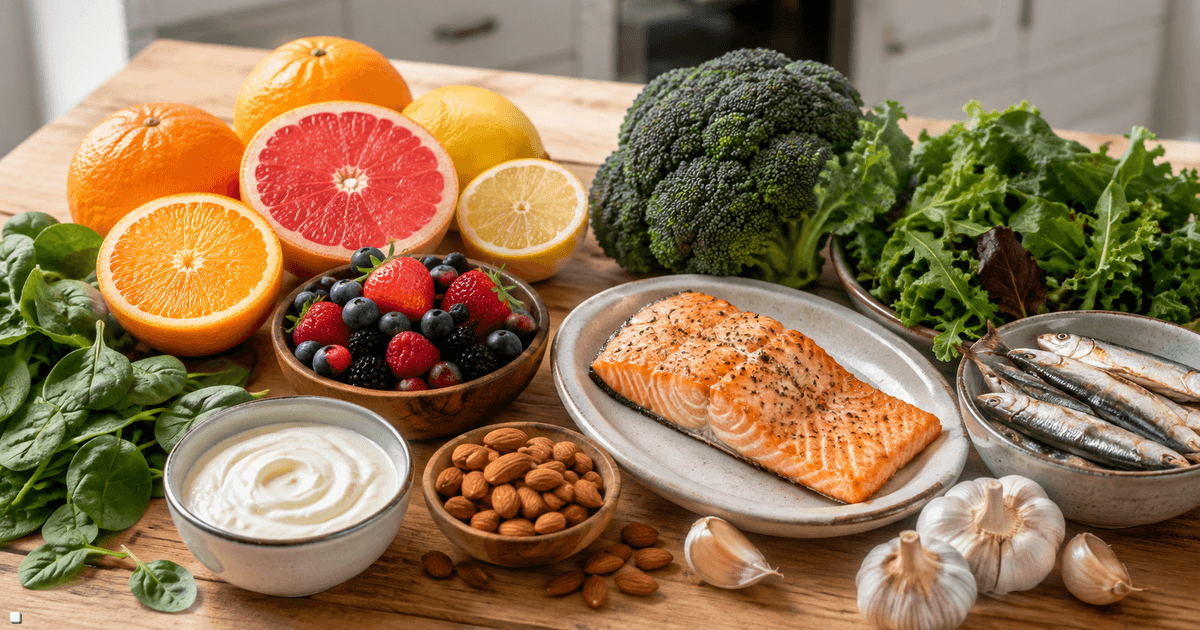
According to the website "Health", various common foods contain vitamins, minerals, antioxidants and healthy fats that play important roles in immunity and overall health. The National Institutes of Health in the United States confirm that obtaining sufficient amounts of nutrients is necessary for immune system function, but consuming higher amounts, especially through supplements, does not prevent infections or accelerate recovery in people without nutritional deficiencies.
Oranges, lemons, grapefruits and mandarins are excellent sources of vitamin C, which plays an important role in innate and acquired immunity and contributes to the normal functions of immune system cells. Berries also provide vitamin C along with plant compounds and antioxidants that help protect cells from oxidative stress. However, evidence does not show that increasing vitamin C consumption prevents disease. According to the National Institutes of Health, consuming it regularly could help slightly reduce the duration and intensity of common cold symptoms.
Fatty fish such as salmon, sardines, mackerel and herring provide omega-3 fatty acids and some contain vitamin D. Vitamin D is associated with the regulation of inflammation and immune system functions, while omega-3 fatty acids participate in several processes related to the inflammatory response.
Broccoli combines vitamins A, C and K along with plant compounds and antioxidants. Leafy green vegetables such as spinach, kale and chard provide vitamins, minerals and plant compounds that the body needs as part of a varied diet. Garlic contains sulphur compounds, with allicin being the most notable. Despite its promotion as an immune booster, the United States National Center for Complementary and Integrative Health notes that research in humans on its ability to prevent infections remains limited.
Almonds are a source of vitamin E, an antioxidant that helps protect cells and plays a role in immune functions. Yoghurt containing live and active bacteria can benefit the gut microbiome, which in turn is related to immune system functions. Not all yoghurts and fermented products necessarily contain live bacteria, as heating or pasteurisation can eliminate them, so it is recommended to check the nutritional label. Yoghurt also provides protein and calcium, and some types may contain vitamin D if fortified.
Food variety remains the most important factor, as there is no single meal or food that guarantees protection against disease. However, consuming a variety of fruits, vegetables, whole grains and healthy sources of protein helps the body obtain the nutrients necessary for immune system function.