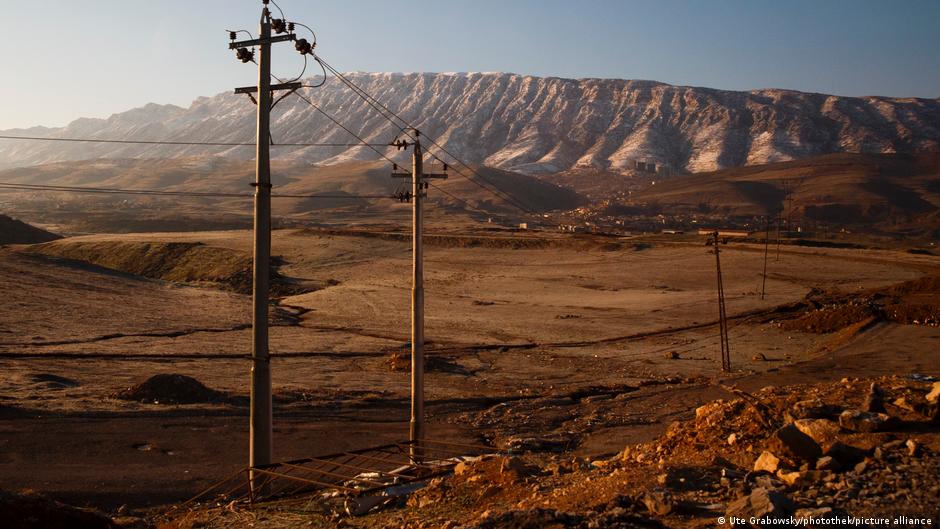
Assyrian residents in Dohuk province in Iraq's autonomous Kurdish region held rare protests denouncing what they called "land occupation by Kurdish clans" in rural areas, with the aim of causing demographic change, they said. The protesters alleged that Kurds possessed political power and security influence to carry out these actions. Regional authorities rejected these accusations, characterising them as a simple traditional local legal dispute that could occur between landowners anywhere, regardless of their ethnic identities.
The matter began in early July when residents of the Assyrian-Christian village of Kashkawa, located in the Wadi Nahla area in eastern Dohuk, launched a call for the "removal of invasions" of their agricultural lands by Kurds who had been cultivating them for the past three years. Residents pointed out that there were final court rulings confirming that these disputed lands belonged to the Assyrians, but authorities had not enforced those rulings.
Many Assyrian politicians and human rights advocates linked the matter to broader political factors related to historical conflicts over the region's national identity. According to them, Assyrian villages have faced repeated depopulation and demographic change over time. Kashkawa was attacked and burned in 1963 during the conflict between the Iraqi army and the Kurdish nationalist movement, forcing its residents to flee. They returned in 1970 when Kurds gained autonomy in the area, but the village was destroyed again in 1988 during the Anfal operations, with residents displaced once more.
Kurdish officials and politicians rejected these claims, characterising them as part of a planned campaign of "extortion and exaggeration". They cited legislation issued by the autonomous Kurdish region's parliament to protect Christians, such as the "Protection of Minorities Law No. 5 of 2015", as well as court rulings and government decisions that they said do not discriminate between citizens. They noted that Christians from across Iraq and the region have moved to Kurdistan and enjoy equality in exercising their civil rights, political freedoms and representation in government institutions.
Estimates indicate that the number of Christians in Iraq today does not exceed 400,000 from a total population of more than 46 million, compared with estimates from two decades ago of approximately one and a half million, with many having emigrated during two decades of wars and conflicts.