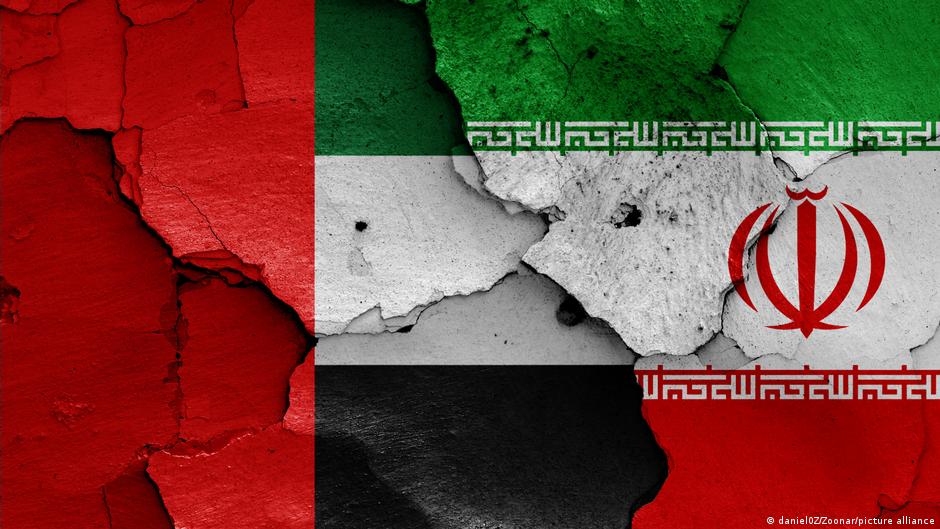
The United Arab Emirates decided to suspend all financial and economic transactions with Iran until further notice, citing military escalation from Tehran accompanied by missile threats. The measure highlighted tensions between this large and wealthy Gulf oil producer and the Islamic Republic of Iran, although Tehran formally denied responsibility for the incident that prompted it.
The UAE, a close ally of the United States and Israel and a rising regional power, has suffered several Iranian attacks in the region. The most recent Iranian attack on Emirati territory dates to 4 May, when port facilities in Fujairah, the main centre for oil exports, were attacked. An Emirati statement affirmed that "assessments carried out showed that the two ballistic missiles detected were launched from Iran and were directed at maritime traffic", adding that they fell into the sea. Iran's Ministry of Foreign Affairs rejected the Emirati statement, describing it as "unfounded".
Afraá al-Hamli, head of the strategic communications department of the Emirati Ministry of Foreign Affairs, said her country "reaffirms its firm commitment to dialogue, cooperation and regional integration as essential means to promote peace, stability and prosperity in the region".
Experts question the implications of the Emirati decision, particularly because Dubai represents an indispensable conduit for Tehran's financial and commercial transactions. A senior European diplomat described Dubai as Iran's "bank", while sources at another European embassy confirmed that "Iranian wealth estimated in the billions of dollars is held in bank accounts within the UAE". According to Iranian data, Abu Dhabi exported goods to Iran worth approximately 22 billion US dollars in 2024. Analysts note that the trade suspension will hit hard an Iranian economy already facing its worst crisis in decades, with food inflation rates recently exceeding 130% compared to the same period of the previous year. The International Monetary Fund forecast inflation close to 70% for Iran this year along with economic contraction of 5.4%.
Donald Trump threatened on Wednesday, 20 August, to impose severe economic consequences on any country that helps Iran or conducts commercial transactions with it, reflecting escalating pressure from the United States economically. The US President wrote on Truth Social: "I declare today that any country that permits its financial institutions, companies, airports and government agencies to provide any form of lifeline to Iran will face severe economic consequences". Trump referred to "unprecedented economic sanctions", specifically mentioning "oil smuggling, currency exchange, cash transfers, money changers, ship registries and shell companies". Iranian spokesman, Lieutenant General Ali Abdolahi, responded that "any aid or facilitation to aggressive US military forces is considered participation with US military forces". Mohammad Baqer Qalibaf, speaker of the Iranian Parliament, emphasised that "the Strait of Hormuz will not open unless US commitments are met". It is unclear whether the UAE coordinated the trade blockade with the United States, although the announcement coincides in time and context with US threats against the Islamic Republic.