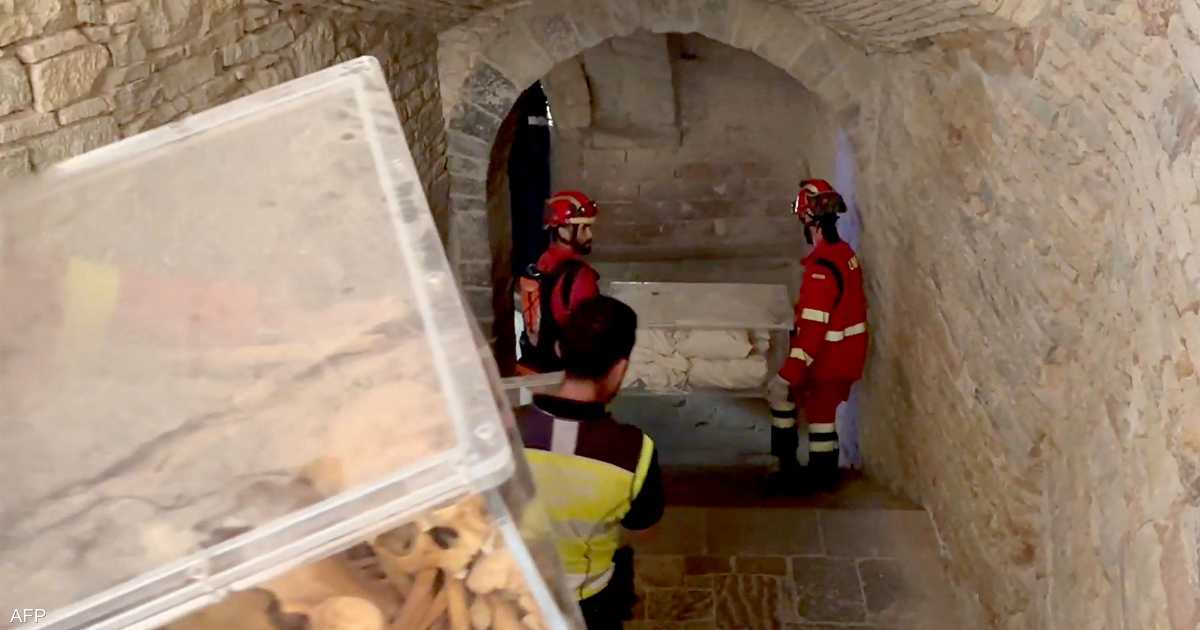
The fire broke out last Monday and spread towards two monasteries among the region's most important historical monuments. The oldest of them dates from the tenth century and houses the remains of Aragón's first medieval kings. According to authorities, these remains were moved to a safe location from Thursday onwards.
The previous week saw adverse weather conditions with changeable winds and high temperatures, which contributed to the fire's expansion covering 16,600 hectares and making necessary the evacuation of over a thousand people from nearby towns.
On Sunday, the regional government reported a "night of positive work" in firefighting efforts, with firefighter teams managing to control a large portion of the fire. Authorities added that efforts would be reinforced with the arrival of 100 French firefighters, in addition to the participation of between 35 and 40 aircraft, along with reinforcements from the military and different Spanish regions, bringing the total number of participants to a thousand personnel.
The president of the Aragón regional government, Jorge Azcón, stated that this mobilisation represented the "largest concentration of resources to tackle a fire in Aragón's history", expressing cautious optimism in a post on the X platform.
In Andalucía, to the south, authorities allowed hundreds of displaced residents to return after declaring a forest fire under control that lasted 10 days and affected over 25,000 hectares.
These fires occur amid extreme heatwaves that Spain experienced during the summer, creating ideal conditions for their spread. Scientists point out that climate change increases the frequency and intensity of these extreme weather phenomena.
A fire that broke out in late July west of Madrid became the worst in modern Spanish history and led to the declaration of a national state of emergency.