More than 20 years ago, Jim and Laura Currie began restoring their Woodland Cottage property in Hancock County, Mississippi, with the primary goal of recovering the habitat of the gopher tortoise (Gopherus polyphemus), a protected species that already lived in the area. The restoration, carried out with support from the U.S. Fish and Wildlife Service (USFWS), Wildlife Mississippi and other agencies, included reforestation with longleaf pine, recovery of the understory with native plants and prescribed burns to maintain ecosystem conditions.
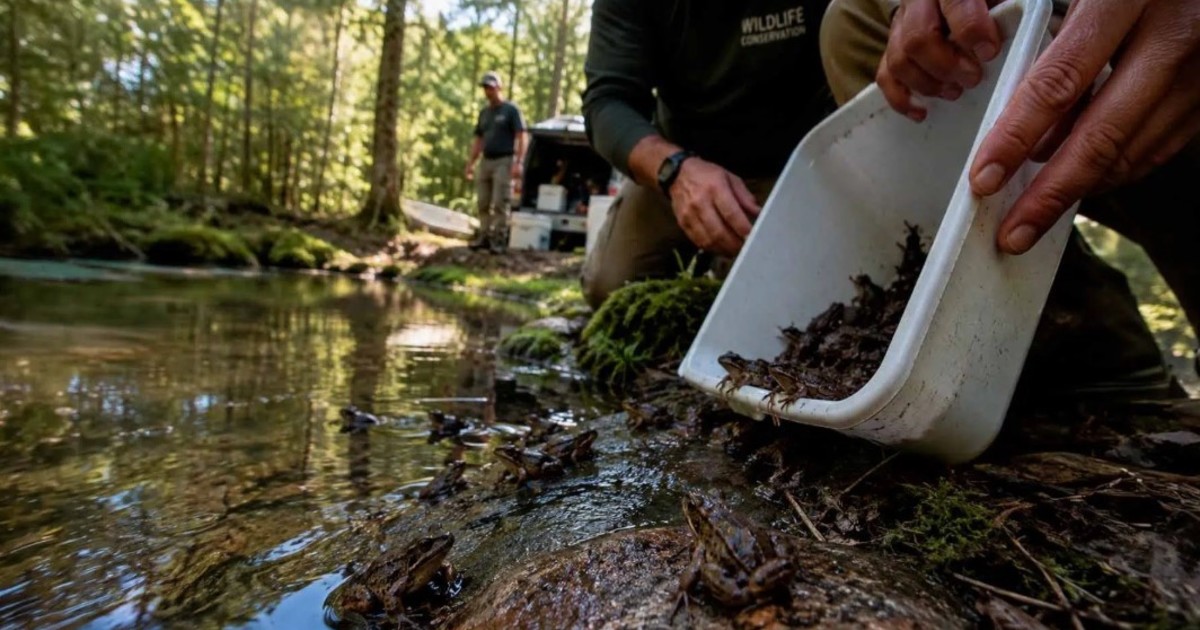
In June 2026, Woodland Cottage's ponds received nearly 500 dark gopher frogs (Lithobates sevosus), one of the rarest amphibians in the United States and listed as a species in danger of extinction at the federal level. The release marked two milestones: it created the only active population of this burrowing frog in Hancock County and was the first reintroduction carried out on private lands that continue to be used productively.
The dark gopher frog historically occupied longleaf pine environments from Louisiana to Alabama, but land modification and suppression of natural fires degraded that habitat. Between 1988 and 2004, scientists knew of only one surviving population in De Soto National Forest. Establishing additional populations is fundamental to preventing a single episode of drought, disease or other disturbance from affecting the entire species simultaneously, according to the USFWS.
The frogs use gopher tortoise burrows to protect themselves from extreme temperatures, droughts and predators, since these burrows can serve as shelter for more than 300 different species. The restoration carried out by the Curries also benefits migratory birds, pollinators, wild turkeys and bobwhite quail, in addition to tortoise and frog species.