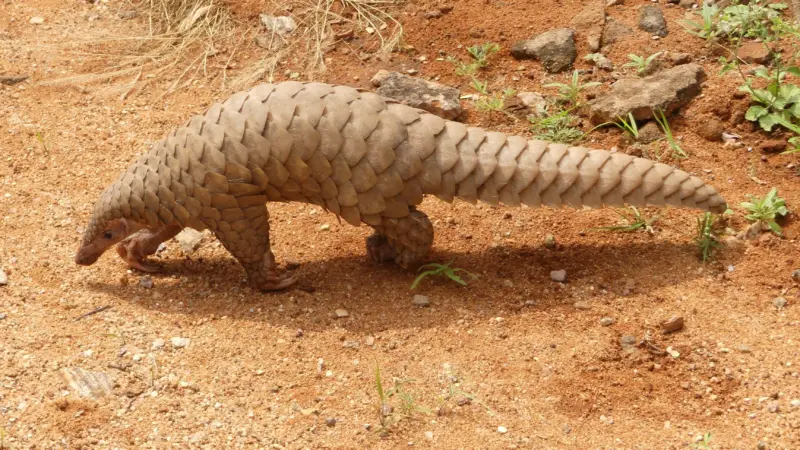
Between 120 and 240 pangolins are seized annually by trafficking networks across India, according to records of reported crimes. A 2022 fact sheet published by TRAFFIC, an organisation that tracks global wildlife trafficking, indicated that around 6000 pangolins were poached in India between 2009 and 2027. Between 2019 and 2022, India's Directorate of Revenue Intelligence reported seizures of approximately 337 kilogrammes of pangolin scales.
Globally, eight pangolin species exist distributed across tropical, subtropical and savanna regions of Asia and sub-Saharan Africa. India is home to two of them: the Indian pangolin and the Chinese pangolin. According to a report by the International Union for the Conservation of Nature, one pangolin is extracted from the wild every five minutes. A December 2025 CITES report documented 2222 global pangolin seizures equivalent to 553,042 animals poached between 2016 and 2024.
The use of pangolin scales in traditional medicine dates back to the Ming dynasty, according to historical records documented by naturalist Li Shizhen. However, there is no scientific evidence supporting medical properties. The scales are composed of keratin, the same protein found in human nails, water and fats. Today they are used to allegedly treat boils, skin infections, insufficient breast milk and even nervousness, despite more effective and cheaper modern medicines existing for these conditions.
In remote indigenous communities in central India, pangolin scales are used as amulets to ward off evil spirits or hung on main doors as they are considered to bring good luck, explained Monesh Singh Tomar, member of the Pangolin Specialist Group of the International Union for the Conservation of Nature, in an interview with Global Voices. India enacted a wildlife protection law in 1972 that classified both pangolin species in the highest protection category, similar to that of the Bengal tiger.
International trafficking of pangolins from India to Vietnam, China and other nations intensified in the twenty-first century through organised networks. According to the International Union for the Conservation of Nature, at least 74 countries are involved in global illegal pangolin trafficking, supplied by 178 international trafficking routes that constantly change. Between 2015 and 2026, Indian authorities conducted more than 500 operations related to pangolins, seizing approximately 2000 to 3000 animals or their equivalent in scales. Social media has increased trafficking through encrypted underground markets that require specialised surveillance tools beyond traditional law enforcement methods, Tomar said.