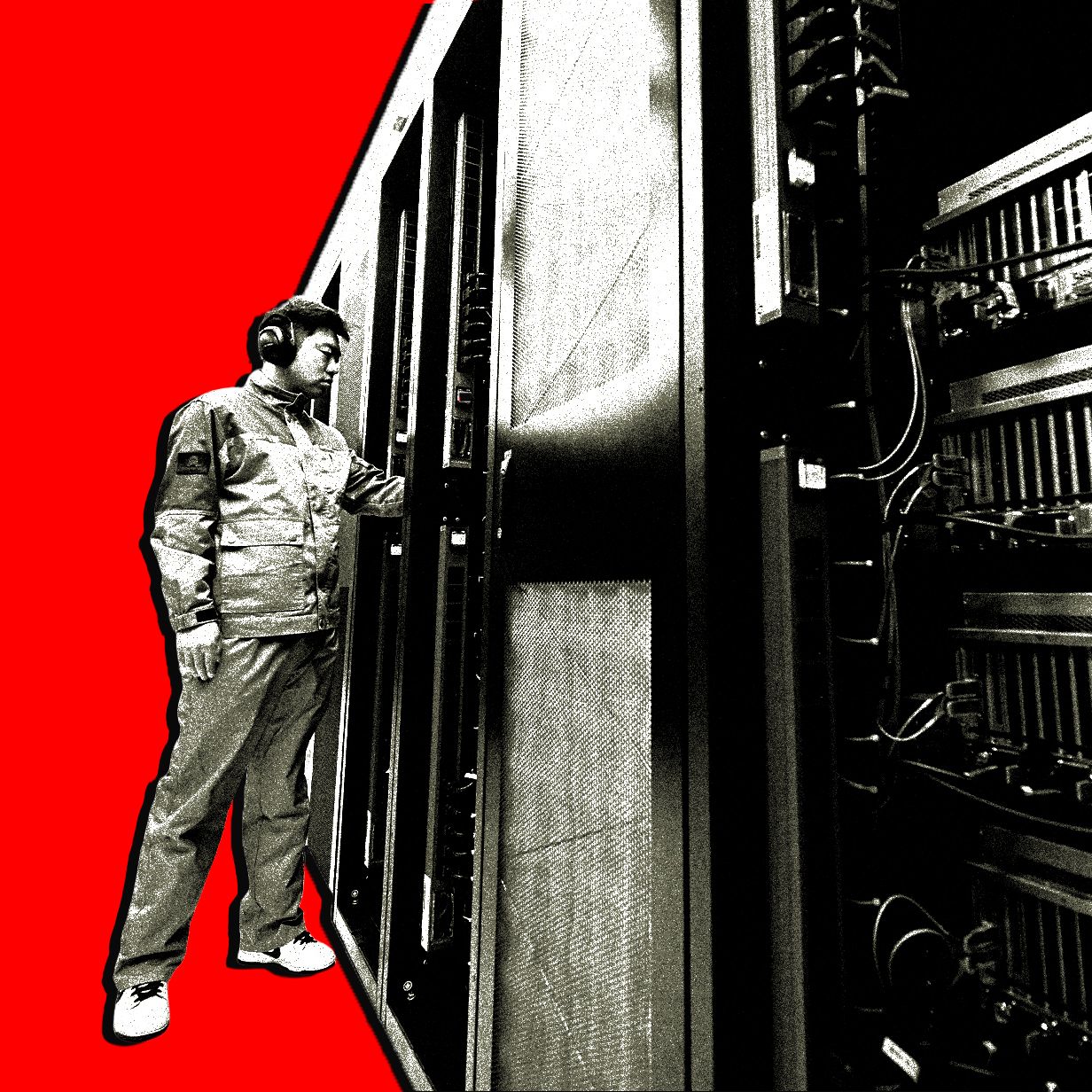
Ulanqab, a city of roughly 1.5 million people in Inner Mongolia, has become the fastest-growing compute cluster in Asia, with nearly 100 data centers opened or under construction since 2016. Chinese companies have pledged to build projects with a combined estimated capacity of 12.5 gigawatts in the city, with over 70 percent of total commitments announced in the last year, according to a Goldman Sachs research note published last week.
The city's advantages for data center development are substantial. Ulanqab sits at high elevation with long, cold winters, reducing cooling costs, while remaining close enough to Beijing for data transmission with minimal latency. Most significantly, electricity prices are substantially cheaper than elsewhere in China, driven by wind and solar energy growth and abundant coal supplies.
For the first time, major Chinese AI companies are building their own infrastructure rather than renting computing capacity from cloud providers. DeepSeek, ByteDance, Alibaba, and Xiaohongshu are among companies constructing data centers in Ulanqab. The shift marks a change from years when Chinese AI companies invested far less in physical infrastructure than American counterparts despite developing capable AI models.
Water scarcity poses a significant challenge to the expansion. Ulanqab receives roughly 14 inches of rain annually, comparable to Denver. The local water company was forced to shut several waterworks for seven hours each night last month to manage peak demand, before most planned projects come online. While data centers require less water during winter months—only two months of additional cooling demand annually according to local government data—the expansion could strain the region's environment.
Inner Mongolia has hosted data centers for over a decade. Huawei built its first in Ulanqab in 2016, followed by Apple in 2019. In 2021, the area was designated a main hub for the government's "Eastern Data, Western Compute" initiative. Remote locations initially faced high latency drawbacks for real-time applications, but AI model training, which takes months and requires minimal real-time adjustment, proved well-suited to the region. Two dedicated fiber optic cables installed in 2017 and 2019 reduced average latency to less than five milliseconds, fast enough for real-time applications like AI inference.