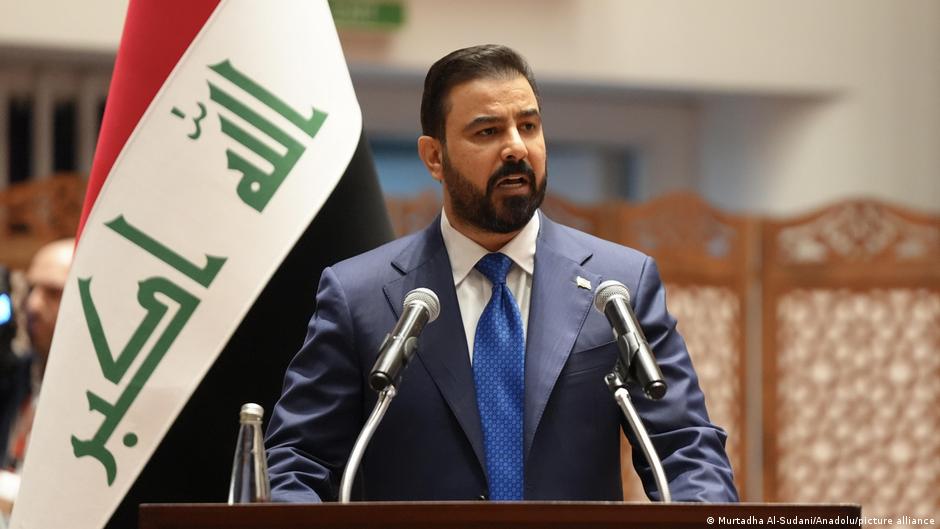
A security spokesman for Kata'ib Hezbollah said the group had tolerated more than one hundred days of what he called empty actions from designate prime minister Ali al-Zaydi, but had seen no development in his understanding of the complex circumstances in Iraq and the region. The spokesman, Abu Mujahid al-Assaf, added in a statement that the group's patience "is beginning to run out" in the face of actions he described as provocative and irresponsible on the part of Zaydi.
Al-Assaf accused security forces of raiding homes and terrorising families of martyrs, wounded and fighters under direct supervision of "the American enemy". The spokesman warned that the militia could "begin to act according to the principle of an eye for an eye", and urged political leaders to correct what he called the security deviation caused by Zaydi.
Kata'ib Hezbollah is one of Iraq's most influential groups and is closely linked to Tehran. It has carried out attacks against American interests in Iraq for years and has lost several of its prominent leaders in American air strikes. The group, along with other armed factions, rejects discussing disarmament, arguing that foreign forces remain in Iraq, particularly as part of the Washington-led international coalition against the Islamic State.
Zaydi, who took office in May with American backing and pledged to concentrate the weapons of armed groups in state hands, gave the factions a deadline of 30 September to hand over their weapons, coinciding with the end of the international coalition's mission and the withdrawal of American forces. Iraqi authorities said they have begun receiving weapons from some groups in recent weeks.
Al-Assaf said that factions clinging to their weapons demand the "complete and real" withdrawal of the international coalition and the liberation of political and economic decision-making from "American hegemony". They also demand the exit of Turkish forces stationed in northern Iraq for years under the pretext of fighting the Kurdistan Workers Party, and the dissolution of the armed peshmerga forces under the control of the Kurdish regional government.
Two Iraqi political sources told the France-Presse agency that Zaydi informed political leaders he was prepared for a "confrontation" and "clash" with factions clinging to their weapons if they refuse to cooperate after the 30 September deadline expires.