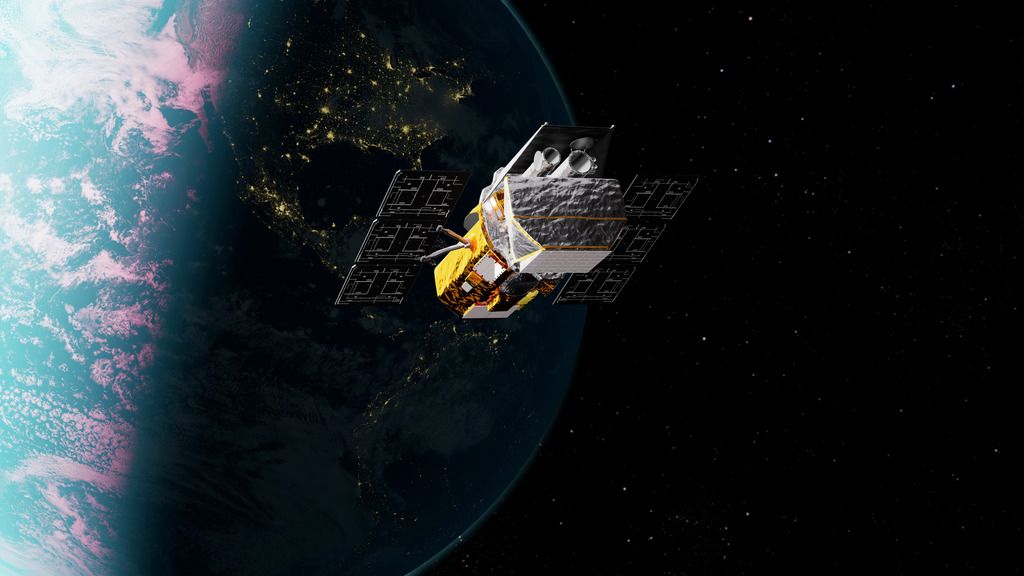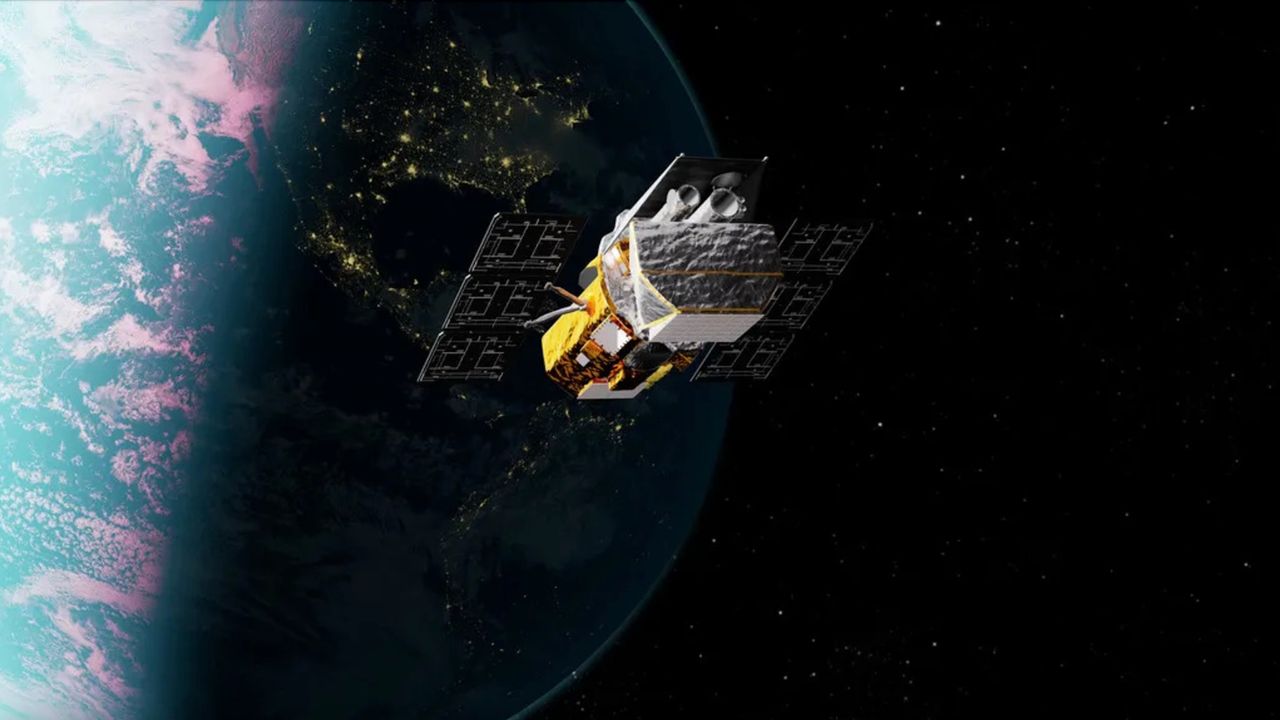
NASA's Neil Gehrels Swift Observatory has returned to studying the universe after spending months in a low-drag configuration while awaiting an orbital rescue mission that ultimately failed.
Mission controllers restarted two of Swift's three scientific instruments — its X-Ray Telescope (XRT) and the Ultraviolet/Optical Telescope (UVOT) — on 26 August. Both instruments had been deactivated in February as part of an effort to minimise atmospheric drag and keep the ageing spacecraft in orbit long enough for another spacecraft to reach it and boost it to a higher altitude, according to a NASA statement from 28 August.
Swift's third instrument, the Burst Alert Telescope (BAT), remains offline. BAT operations were suspended in April to conserve power, allowing controllers to position Swift's solar panels in a way that further reduced drag from its interaction with Earth's atmosphere. NASA indicated that the mission team expects to resume data collection with the instrument within the coming weeks.
"For the past 21 years, Swift has been NASA's versatile tool for studying the cosmos," NASA officials said in the statement. "It observes a wide range of light, rapidly points to short-duration explosions and sends alerts to other facilities in space and on Earth to help coordinate follow-up observations."
The return to science operations follows NASA's decision to abandon plans to raise Swift's orbit using LINK, a robotic servicing spacecraft built by Arizona-based company Katalyst Space. LINK was launched on 3 July aboard a Northrop Grumman Pegasus XL rocket with the ambitious goal of docking with Swift, capturing the observatory and raising its orbit.
However, the rescue mission encountered difficulties in late July when LINK developed attitude control problems that caused it to spin and disrupted communications. Two of the spacecraft's three reaction wheels were found to be non-functional, while its cold-gas propulsion system also experienced some loss of functionality.
Although engineers managed to reduce LINK's spin and recover attitude control, NASA and Katalyst announced on 19 August that the spacecraft would no longer attempt to capture and boost Swift. Instead, LINK is expected to dock with Swift and perform proximity operations, providing an opportunity to demonstrate technologies that could be used in future satellite servicing missions in space, leaving Swift without the planned orbital boost to extend its life and with an increasingly uncertain future.
Launched in 2004, Swift was originally designed for a two-year mission studying gamma-ray bursts, the most powerful explosions in the universe. More than two decades later, the observatory continues to detect and rapidly track fleeting cosmic events in gamma rays, X-rays, ultraviolet light and visible light, while alerting other observatories to focus their attention on the same targets.
Unlike some spacecraft in low Earth orbit, Swift does not have a propulsion system capable of counteracting atmospheric drag. Increased solar activity has warmed and expanded Earth's upper atmosphere, increasing drag on Swift and causing its orbit to decay faster than expected.
NASA's low-drag operations were expected to keep Swift above an altitude of approximately 300 kilometres until October. Below that threshold, operation of the observatory becomes increasingly difficult and its descent accelerates, NASA officials said in the statement.
Now that science operations have resumed and the planned orbital boost is ruled out, NASA expects Swift to reach that critical altitude within one to two months. Without intervention, the observatory is expected to burn up upon re-entry into the atmosphere later this year, according to the space agency.