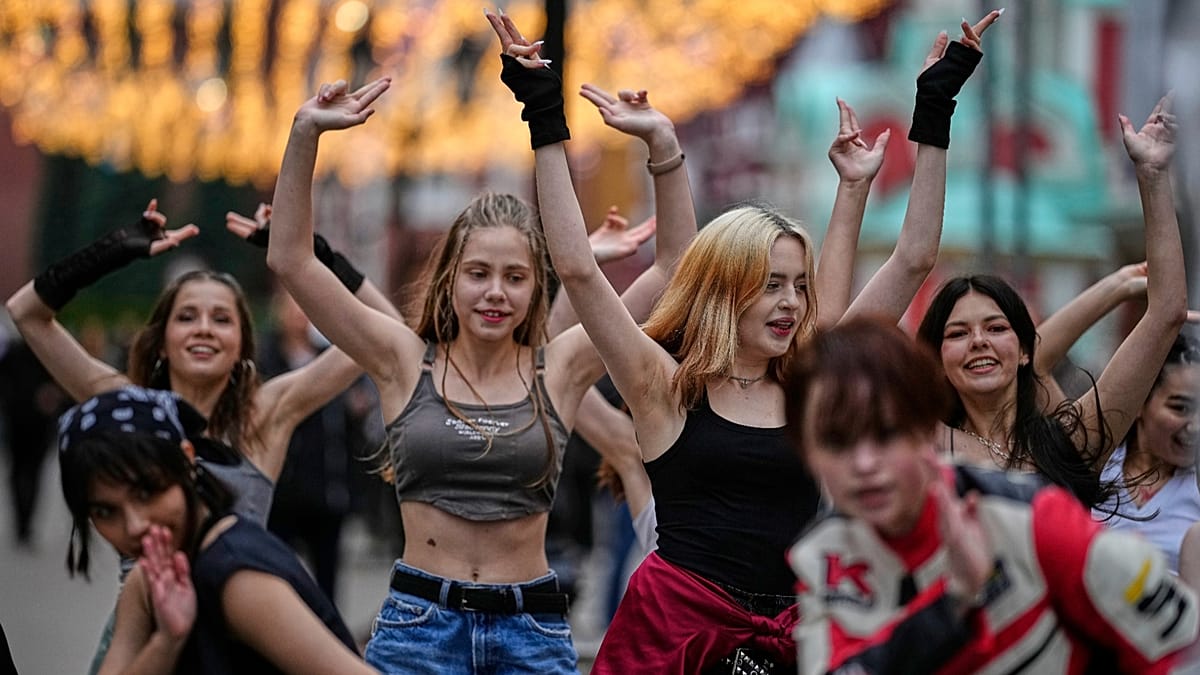
Two teenagers face off in front of a crowd watching intently. Without punches or rhymes, competitors attempt to demonstrate who possesses more "aura" through gestures, poses and recreations of recognisable viral memes from the internet.
The "aura farming" or "farmear aura" battles have brought a language originating from social networks to the streets. Young people, mainly between 14 and 20 years old, compete by reproducing some of the most popular videos and memes from TikTok. The phenomenon has generated events in Mexico, Argentina, Brazil, Peru, Bolivia and Spain.
The concept combines two distinct terms. On social networks such as TikTok and Instagram, "aura" describes the style, attitude or charisma that a person projects. "Farmear", derived from video game vocabulary, refers to repeating actions to accumulate points or resources. "Farmear aura" consists of displaying something that allows one to symbolically gain charisma and popularity points.
In a recent competition in front of the Palacio de Bellas Artes in Mexico City, participants used viral references to surpass their opponents. Carlos Irving Quintana, 14 years old, drew applause by recreating Cristiano Ronaldo's famous "Siuuu" jump and applying "mewing", a TikTok trend that consists of defining the jaw. His rival responded with the "6-7" gesture, a meme widespread among young people.
According to Aldhir Gonzalez, 22 years old and organiser of the Mexican competition, who explained to AFP, the key lies in mastering the codes of the internet. "Whoever looks better, shows off more, provokes more laughs and has more confidence wins," he said.
Kaled Rosales Salazar won the Mexican competition wearing trousers of the Lightning McQueen character from the film "Cars" and clogs. During a confrontation, he used a white sandal as an accessory and imitated catching his rival with a lasso. The teenager took home 3,000 Mexican pesos, approximately 177 dollars. In Argentina, recognition can be more abstract: the prize consists of being able to boast of having "infinite aura".
Venezuelan psychologist Maria Eugenia Tovar argues that these competitions can encourage in-person encounters among teenagers, something significant for a generation accustomed to relating through social networks. However, not everyone understands the phenomenon. A mayor in Honduras banned the battles, arguing that there would be compulsory military service if he had his way.
For Rosales, winner of the Mexico City competition, the explanation is simple. He plans to participate in new battles not necessarily for money. "More than for a prize, I do it to have fun and get out of the house," he told AFP.