Colourful mosaic of the Tarantula Nebula

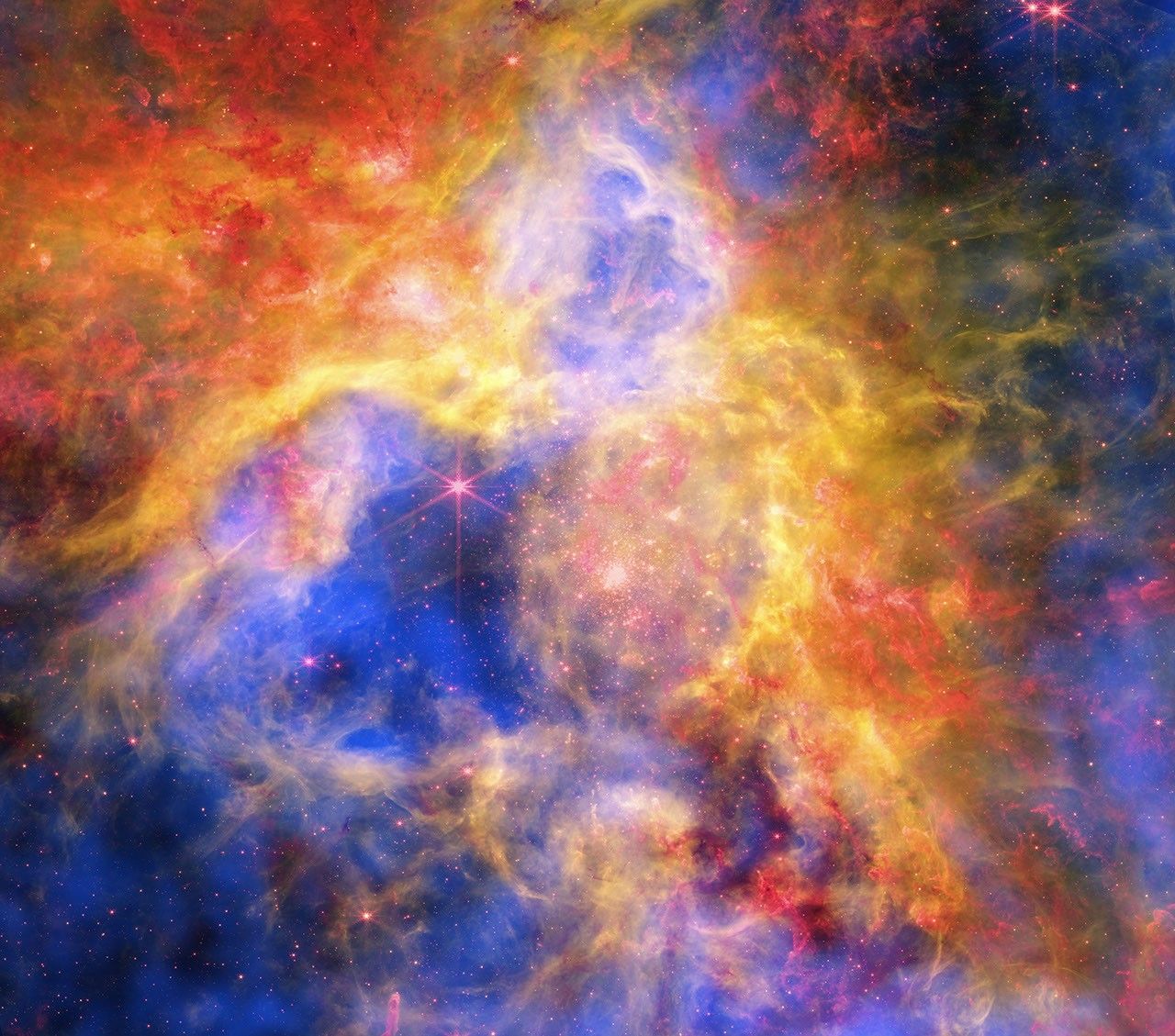
Combined data from NASA's Chandra X-ray Observatory, the James Webb Space Telescope and the Hubble Space Telescope reveal a vibrant view of the Tarantula Nebula located 160,000 light-years from Earth.

Por El Medio Oriente
18 de agosto de 2026
A luminous and colourful nebula with swirls of gas in shades of red, blue, yellow and purple, with bright stars scattered throughout the image.
Composite image from multiple space observatories showing the Tarantula Nebula with its incandescent gas structures and young stars. Combined data from Chandra, James Webb and Hubble reveal details across wavelengths from X-rays to visible and infrared light. (NASA — Breaking News)
1 min de lectura
Tamaño del texto

Data from NASA's Chandra X-ray Observatory, NASA's James Webb Space Telescope and NASA's Hubble Space Telescope combine to reveal a vibrant view of 30 Doradus, or the Tarantula Nebula, in this image from 11 August 2026. Located in the Large Magellanic Cloud, a small neighbouring galaxy to the Milky Way approximately 160,000 light-years from Earth, the Tarantula contains thousands of young stars embedded in a honeycomb-like structure of vibrant gas and dust.

By studying data from Chandra, Hubble and Webb, combined with data from the agency's now-retired Spitzer Space Telescope, astronomers determined that the Tarantula Nebula could be losing energy from several sources, including hot gas escaping from the nebula.
Colourful mosaic of the Tarantula Nebula | El Medio Oriente