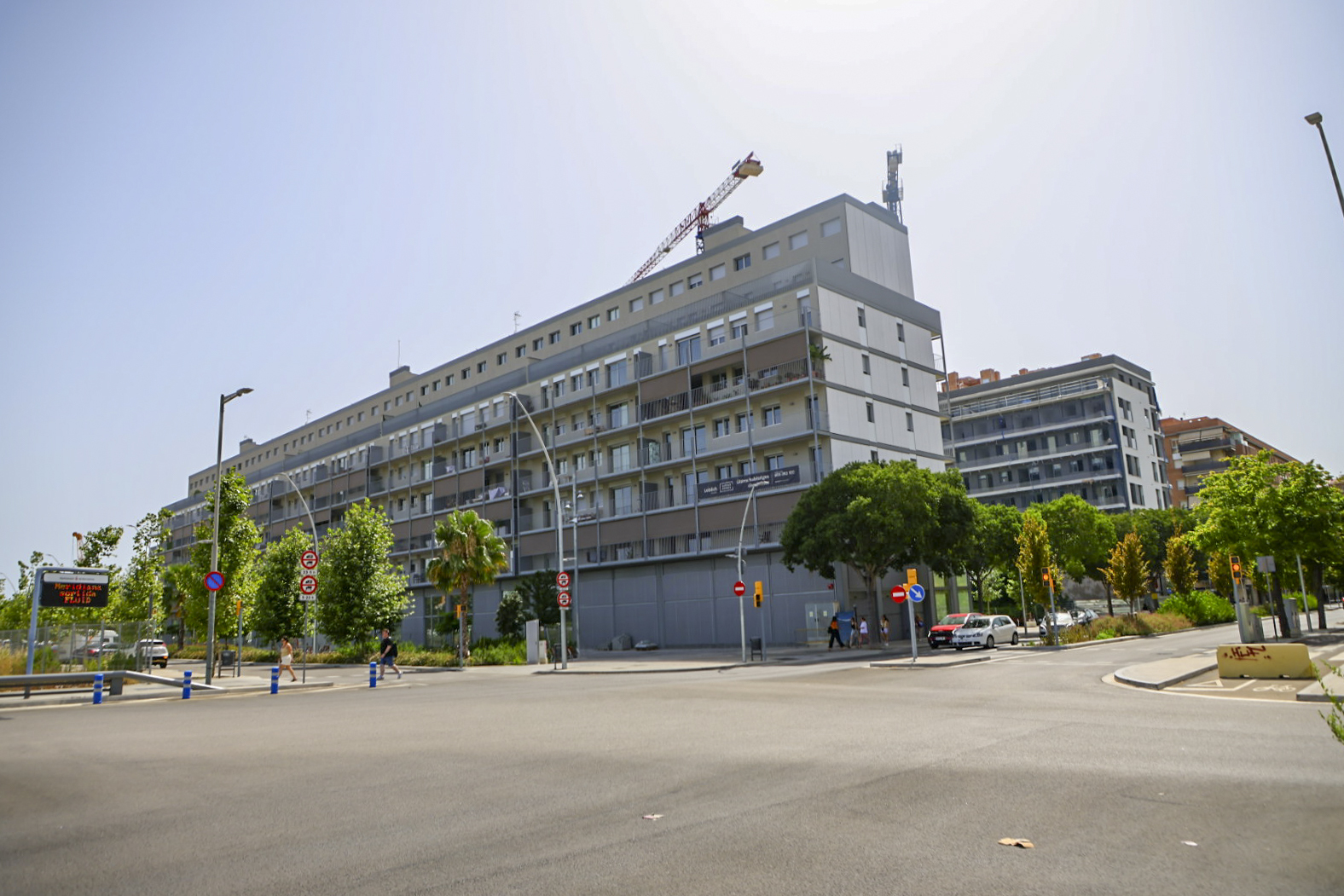
Barcelona's metropolitan region faces a severe shortage of new official protected housing (VPO) developments in most of its municipalities. Between 2020 and 2025, only 46% of the 131 municipalities in the area registered provisional VPO qualifications, meaning that less than half initiated procedures to develop this type of project.
The percentage is even lower in 2025, according to data from the Associació de Promotors de Catalunya (Apce), with only around one in four localities registering protected housing qualifications. VPO construction is highly concentrated in a few towns, resulting in 89% of Barcelona's localities achieving barely one official protected housing unit per 1,000 inhabitants last year.
This situation contrasts with the high demand for VPO in the region, where 104,004 applications were registered in the Generalitat's register. The number of provisional protected housing units does not exceed 3,000, generating a ratio of 35 applications per housing unit started.
Xavier Vilajoana, president of Apce, stated that "the diagnosis is clear: demand for protected housing is far greater than new supply" and identified the problem as a matter of "regulation" and "real construction capacity". Vilajoana added that "affordable housing needs land, licences, financing, legal certainty and economic viability".
The VPO deficit extends to general market production. The territorial sectoral housing plan estimates that the metropolitan region needs approximately 15,500 new housing units annually to meet household creation, equivalent to three housing units per 1,000 inhabitants. In 2025, the region barely reached a ratio of 1.7 units approved per 1,000 people.