On 12 August 2026, Europe witnessed its first total solar eclipse in more than two decades. Millions of people were amazed to see the Moon completely covering the bright disc of the Sun, briefly turning day into night and revealing the outer atmosphere of the star. Totality could be seen from Greenland, Iceland, Spain and Portugal, while most of the rest of Europe observed a partial eclipse.
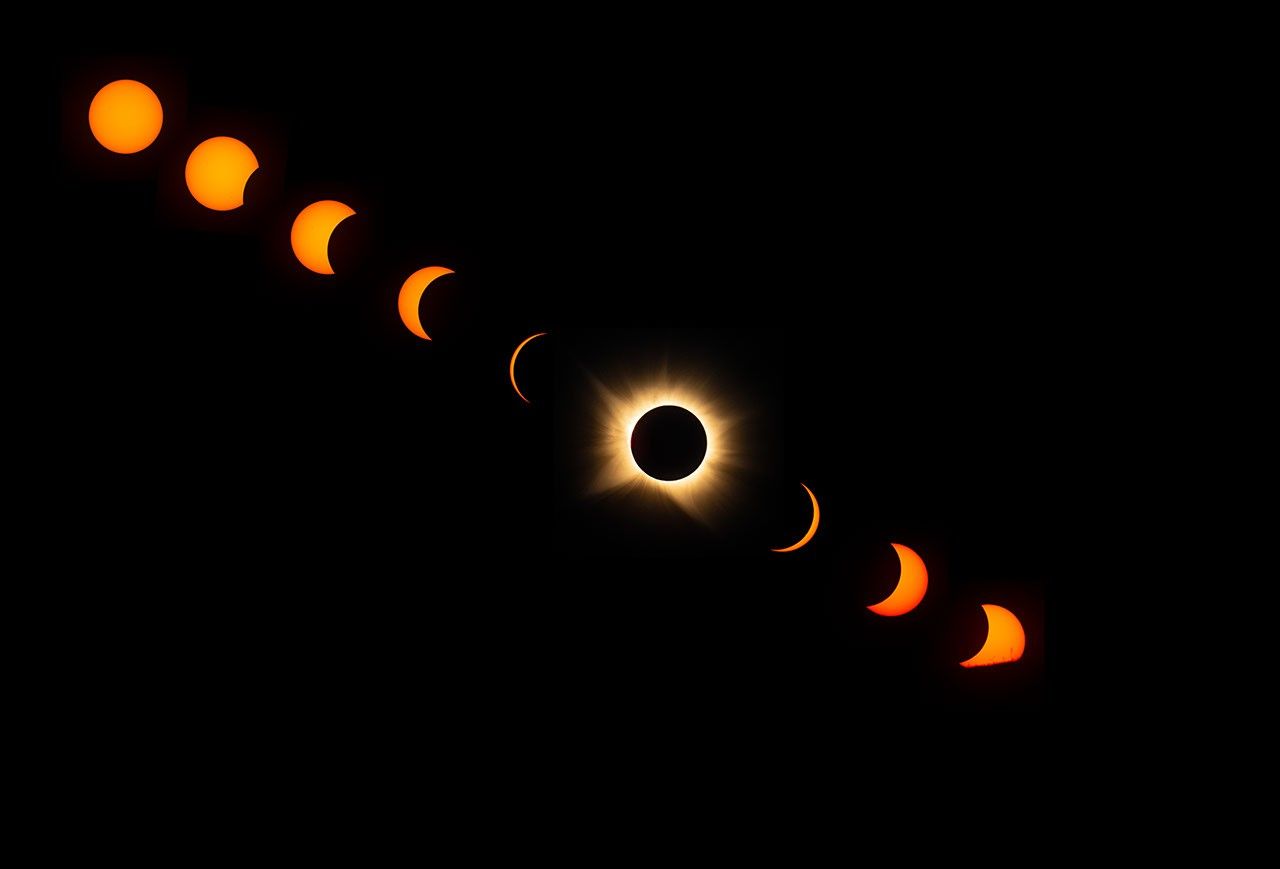
As the Moon eclipsed more of the Sun, the light faded and the temperature dropped. Shadows sharpened, and leaves on trees moving (or colanders held up to the light) cast crescents on the ground. Just before the solar disc was completely blocked, small beads of light could be seen at the lunar edge, where sunlight passed through the lunar valleys. With one final brilliant flash of light, known as the diamond ring effect, totality began.
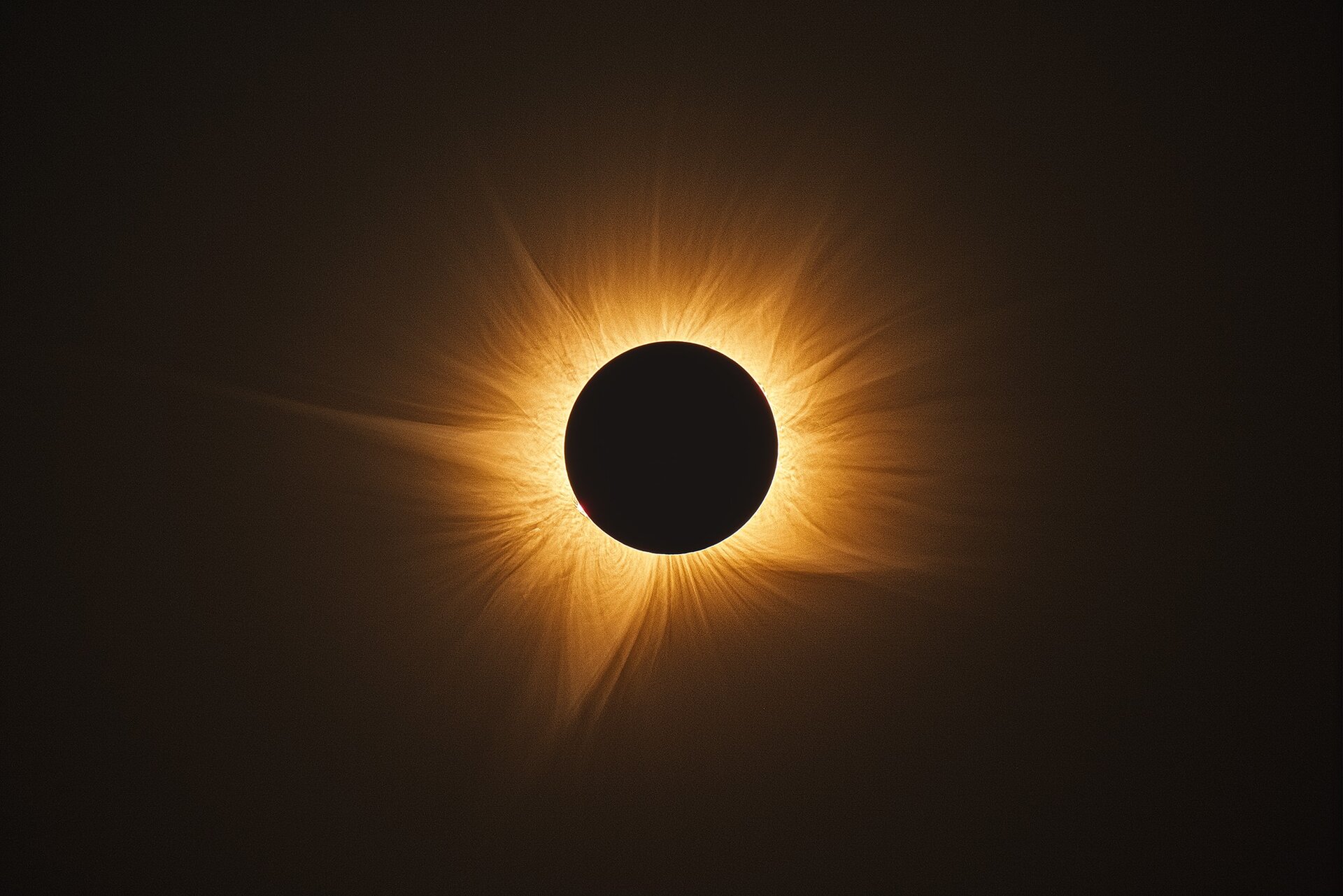
In an instant, darkness engulfed the sky and the Sun's outer atmosphere was revealed in all its glory. White lines of light extended in all directions, and red and brilliant prominences clung near the solar surface. "I think 'mind-blowing' sums it up," said the European Space Agency's Director of Science, Professor Carole Mundell, during the ESA's live broadcast from the Javalambre Astrophysical Observatory, in Spain. "The detail was incredible. This eerie night-time light is what it feels like, but it is not night. Really, really special".
The European Space Agency organised live telescope broadcasts from the Spanish sites of León, Palencia and Javalambre, and photographers from across Europe shared their images. The MTG-I1 Earth observation satellite captured the shadow of the Moon moving across the Earth, and the ESA's artificial eclipse machine, Proba-3, captured a double eclipse from Earth orbit. The programme was presented by Dr Maggie Aderin and explored topics ranging from the mysteries of the Sun and its corona, to how a famous eclipse changed our understanding of gravity.
The ESA, together with the City of León and the University of León, organised a free public event at the León Palace of Exhibitions and Congresses on eclipse day. Between ten thousand and twelve thousand people are estimated to have attended the daytime pre-eclipse programme, which consisted of practical workshops, experiments and interactive activities designed for all ages. A highlight was the "inclusive eclipse" workshop, where members of the ESA's CESAR science education team demonstrated tools for experiencing an eclipse without using your eyes, including 3D-printed tactile models of the Sun, Moon and Earth, as well as demonstrations with Micro:bit and LightSound sensors.
Approximately fourteen thousand five hundred people attended the evening programme, which covered the eclipse itself, with scientific talks and expert commentary guiding visitors through each stage of the phenomenon. As the eclipse began, everyone gathered in the observation area and used eclipse glasses or indirect methods such as a pinhole camera to safely observe the Sun. A large screen showed the ESA's live telescope broadcast recorded in León, and after totality in León ended, visitors watched the telescope broadcast of totality from the ESA's broadcast location near Teruel.