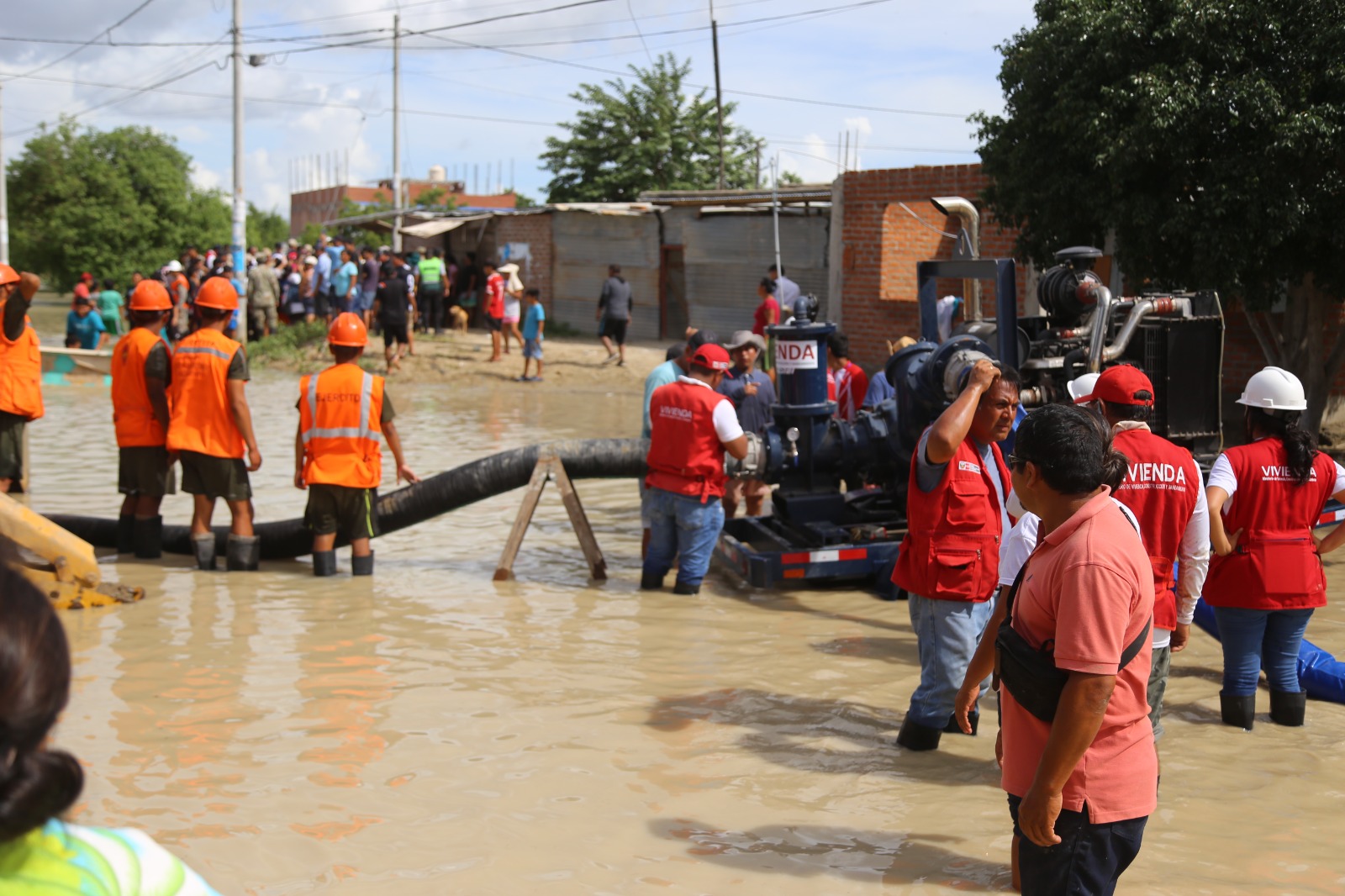
The Peruvian government ordered the temporary closure of schools in south Lima following Sunday's rains, which caused the collapse of 17 drains and flooded streets and homes. The event affected 63 houses and 143 families, though it resulted in no deaths.
The situation highlights the vulnerability of a city with a desert climate, where rainfall is scarce and the stormwater drainage system is not designed for heavier precipitation. The local meteorology service had forecast daily rainfall accumulations of one millimetre along the Lima coast, but some areas registered close to five millimetres.
During a visit to the affected areas, President Keiko Fujimori noted that rains could continue for up to three days in Lima and could also affect the southern part of the country. According to the president, in those regions, rainfall could activate ravines and turn them into water currents, as well as generating hail in the Andes.
The president indicated that conditions are associated with an Upper-Level Isolated Low, a mass of cold air at altitude that can cause atmospheric instability, heavy rain, storms and hail.
Peru is also preparing for the possible effects of El Niño, a phenomenon linked to warming Pacific waters. Meteorologists warn that this event could match or exceed the intensity of the 1997 El Niño, which caused heat waves, heavy rains, floods, droughts, tornadoes and forest fires.