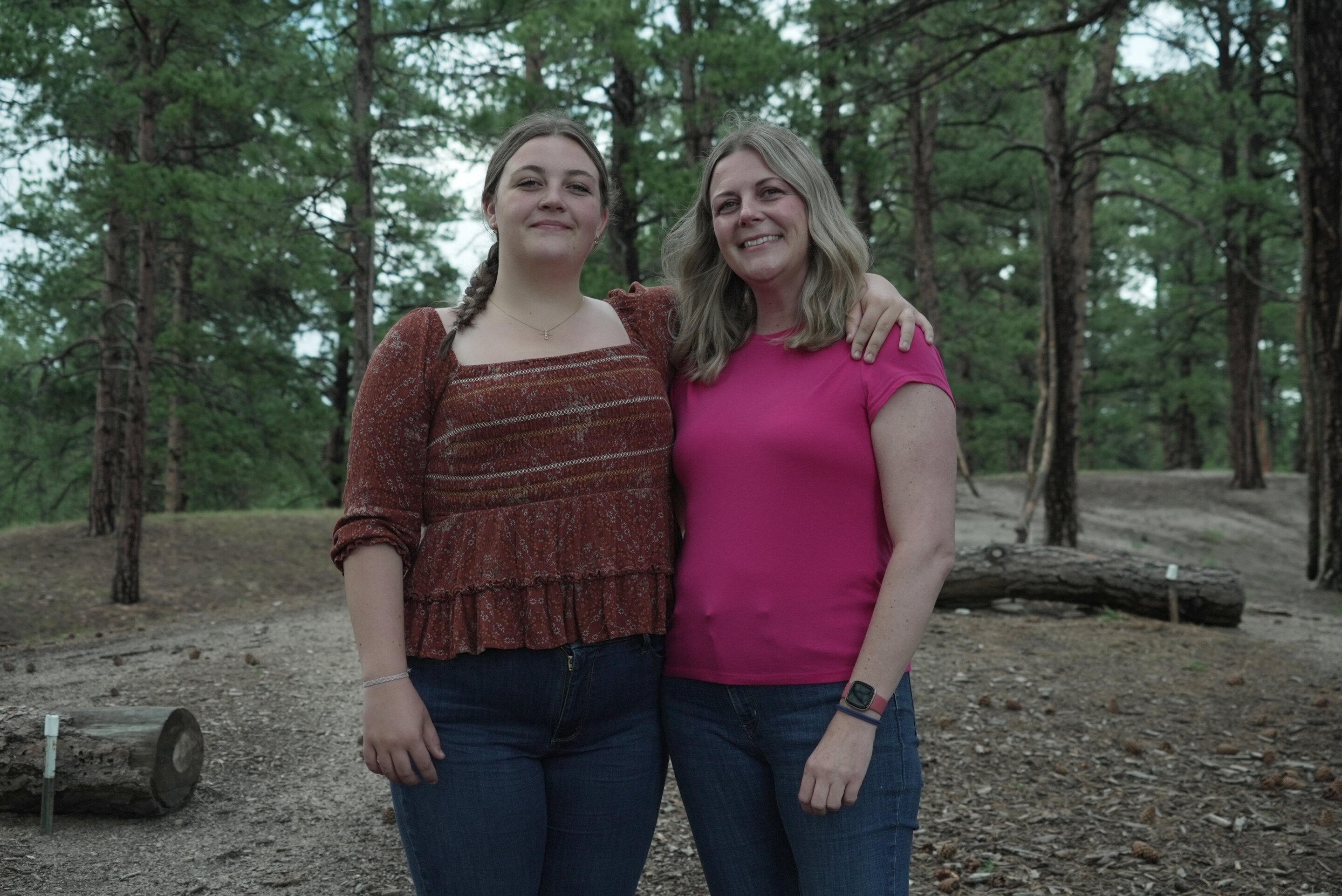
Charlotte Touzalin was still a teenager when she began struggling with weight gain, abnormal periods and unwanted facial hair—the same bewildering symptoms that tormented her mother for decades without any doctor able to explain them.
"I would go home and cry," said Touzalin, an 18-year-old university student from Colorado. "I didn't understand why all that weight kept coming back or why my friends didn't have to shave their faces and I did."
Touzalin and her mother, Anne Schultz, were eventually diagnosed with metabolic and ovarian polyendocrine syndrome, a hormonal disorder affecting 1 in 8 women worldwide. But unlike her mother, Touzalin is beginning her adulthood with new hope after participating in a study testing GLP-1 medicines as a treatment.
A small but growing body of research shows that these obesity medicines could also work for the disorder known as PCOS, not only promoting weight loss but also improving insulin resistance, hormone balance and ovulation. These factors are key to the disease, which was previously called polycystic ovary syndrome but was renamed earlier this year to shift focus away from the ovaries and cysts.
"We need to do a better job caring for it," said Dr. Melanie Cree, who has led three studies testing GLP-1 medicines for PCOS, including the one Touzalin joined. "We found them incredibly effective and really exciting for improving symptoms in women with this condition."
Touzalin's and her mother's long and frustrating journey with PCOS is common. Diagnosis often takes years because symptoms overlap with other conditions, vary widely and can be dismissed by doctors. The disorder tends to run in families, and many but not all affected women are overweight. But there is no known cause or specific treatment, only symptom management such as taking birth control pills to regulate the menstrual cycle and maintaining weight through diet and exercise.
Two hormones are key drivers of PCOS: insulin, which acts as a key to allow blood sugar to enter cells, and testosterone, which among other things helps maintain sex drive, bone density and muscle mass.
Most women with PCOS, regardless of body size, have insulin resistance, meaning this hormone does not work as well as it should, said Cree, director of the PCOS clinic at Colorado Children's Hospital. In many women, high insulin can go directly to the ovaries, stimulating them to produce more testosterone and leading to problems like missed periods, severe acne and even beard growth.
Schultz, 43, did not even know the condition existed when she began having irregular periods and bloating around age 18. In addition to struggling with the same symptoms as her daughter, she had problems with her ovaries and numerous miscarriages, which are more common with PCOS.
Schultz received several diagnoses before learning she had PCOS around the same time her daughter did, who faced a similar medical odyssey.
Schultz recalled talking about Touzalin's symptoms with a paediatrician who was seeing her for what they thought was primarily an overeating problem and ADHD.
Schultz told the doctor: "There has to be something more going on here."
Touzalin said she felt "heard for the first time" when a nurse practitioner began putting the puzzle together a few years ago. Cree definitively diagnosed her last year.
"It was like a gift from heaven," said Schultz, with tears in her eyes. "We finally had an answer and some kind of path for her."
In Cree's study, Touzalin injected semaglutide weekly for 10 months. Abnormal hair growth slowed and her periods normalised. For the first time, she felt satisfied after eating and stopped gaining weight constantly.
"I became a happier version of myself," she said. "I felt like a normal person."
Touzalin's results were not unique. Initial data from the study, published in June in the journal Fertility and Sterility, showed that eight of 11 participants who completed the trial lost at least 10% of their body weight. Median weight loss among them was approximately 42 pounds; the median drop in testosterone was 52%. Six women had more periods and four of them went on to have monthly periods.
In Cree's three studies, women on GLP-1s lost more weight than those in control groups, and testosterone, blood sugar and insulin levels fell. Although the study involving Touzalin examines semaglutide injections, the other studies examined semaglutide pills in one and exenatide injections in the other.
Other global studies have shown similarly positive results. Although the studies are small, some researchers say GLP-1s are already showing promising potential for addressing metabolic problems in PCOS. Others say the evidence remains uncertain, and more studies are underway.
As research continues, more and more doctors are prescribing the drugs "off-label" for PCOS and seeing improvements in their patients. But insurance coverage is often an issue because the drugs are not approved to treat the condition.
"I use these medicines a lot," said Dr. Rana Malek, an endocrinologist at the University of Maryland Medical System.
Among patients with insulin resistance, she said she generally uses them to help with weight loss.
Doctors emphasise that results vary. GLP-1s do not work for everyone and can have side effects, such as nausea and constipation. If people stop taking them, the weight can return.
Still, they can help many patients with PCOS, said Malek, and it is frustrating that many cannot get them because of insurance issues. Not only are they not approved for PCOS, some insurers do not cover them for weight loss.
Touzalin recently faced this barrier. After finishing her participation in the study, she no longer receives free GLP-1s and had to stop taking them in June.
Schultz is determined to get her back on them. She is fighting with her insurer and has a backup plan.