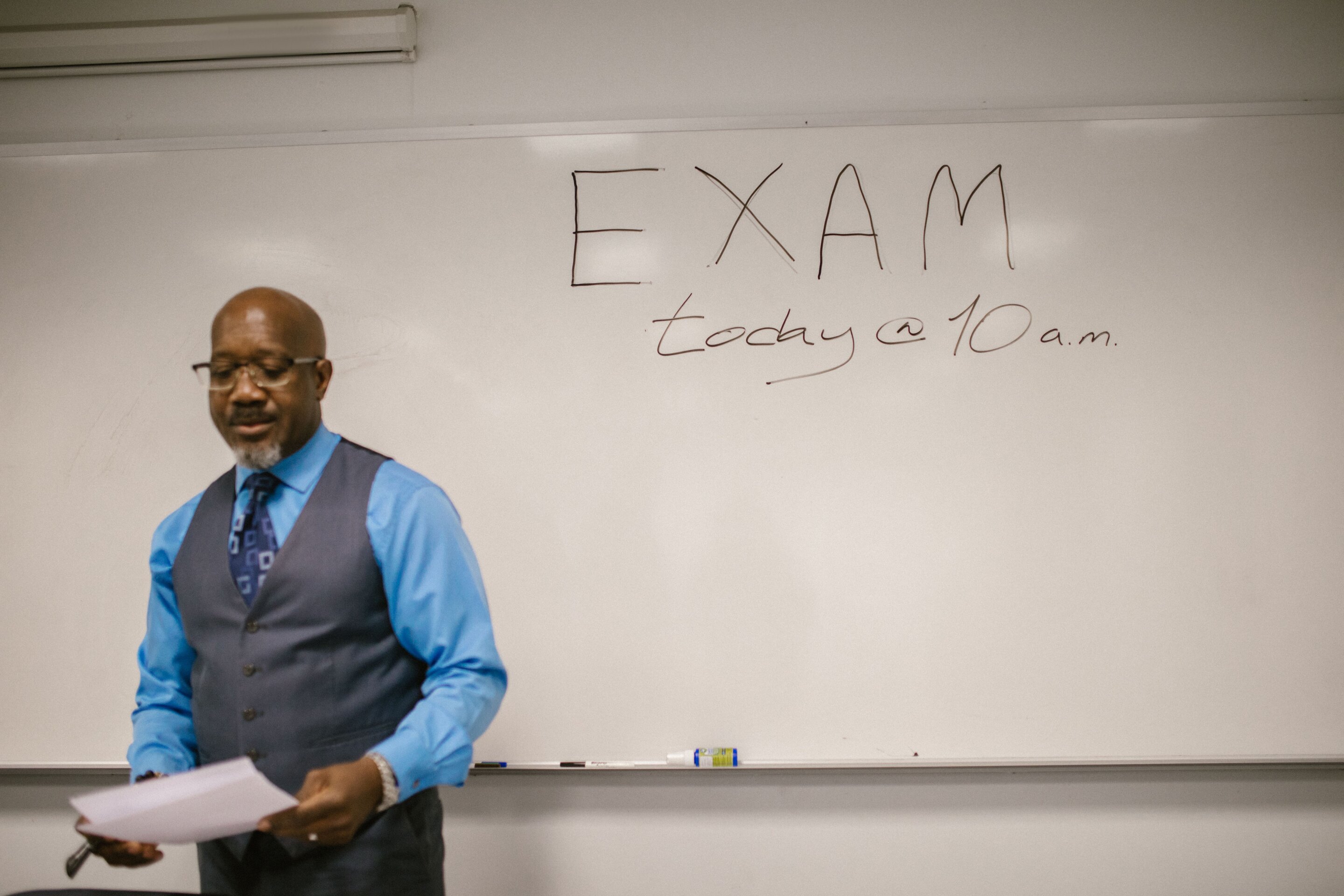
Universities are increasing their use of oral exams to prevent students using artificial intelligence to commit fraud. Some institutions say this method allows teachers to evaluate student knowledge more accurately. Some schools in New South Wales are also using oral exams to prevent cheating.
Oral exams, or "vivas", are among the oldest evaluation methods. However, they are not a foolproof solution, as universities and schools struggle to guarantee academic integrity. Oral exams date back to ancient Greece, when teachers would pose questions to students that had to be answered on the spot to demonstrate their knowledge of a subject. They became less common over time, as written exams proved easier to administer to growing numbers of students, though oral assessment never disappeared entirely.
Beyond evaluating knowledge, oral exams allow examiners to ask students immediate follow-up questions and prompt them to clarify specific points. These exams can also help students develop public speaking and communication skills. However, oral exams can create barriers for some students. Research suggests they can increase social anxiety. A German study found that university students experienced more anxiety in oral exams than in written ones. If students are too anxious, they may not be able to demonstrate to examiners what they actually know.
Oral exams can also unfairly disadvantage students who must speak in a language that is not their first language. These students might have solid knowledge of the subject but need more time to express that knowledge. Research also suggests it is difficult to ensure oral exams are consistent. A study of oral exams in Norwegian secondary schools found that students' initial presentations lasted between 5 and 16 minutes, while follow-up discussions ranged between 7 and 23 minutes. This gave students unequal opportunities to demonstrate their knowledge. A follow-up study found that, with the same examiners, some students received fewer than 10 questions while others received nearly 50.
As a measure against fraud, oral exams are not perfect. A student could use artificial intelligence to rehearse and memorise convincing answers, whilst another who wrote every word might go blank under pressure. If oral exams are used simply as an "AI lie detector", the evaluation can become a test of believability rather than a test of learning or effort. Research suggests that effective forms of school assessment should include examiners communicating to students in advance the purpose of the assessment, its grading criteria, and the types of questions examiners might ask.
Students should also have regular opportunities to practise public speaking, sufficient time to think before answering questions, and appropriate adjustments to help them feel more comfortable, such as choosing the time of the exam and whether they prefer to sit or stand while speaking. Examiners should use consistent, agreed prompts for follow-up questions, so students have comparable opportunities to demonstrate their learning. Along with a shared marking rubric, having other teachers review a sample of marks can provide oversight without creating an unmanageable workload.
Research suggests oral exams are most useful when used alongside written or practical assessments, rather than replacing them. For example, rather than replacing a history essay with an oral exam, students could submit an annotated essay draft and a list of references, followed by a five-minute conversation with the teacher. In this discussion, the student could explain their decision to include a specific reference, a notable revision they made, and how any artificial intelligence assistance influenced their thinking. A well-designed oral exam can show how students have engaged with a topic and support a meaningful conversation between teacher and student, which can strengthen assessment and trust. If used as a form of interrogation, it can simply replace one integrity problem with an equity problem, as well as much more work for examiners.