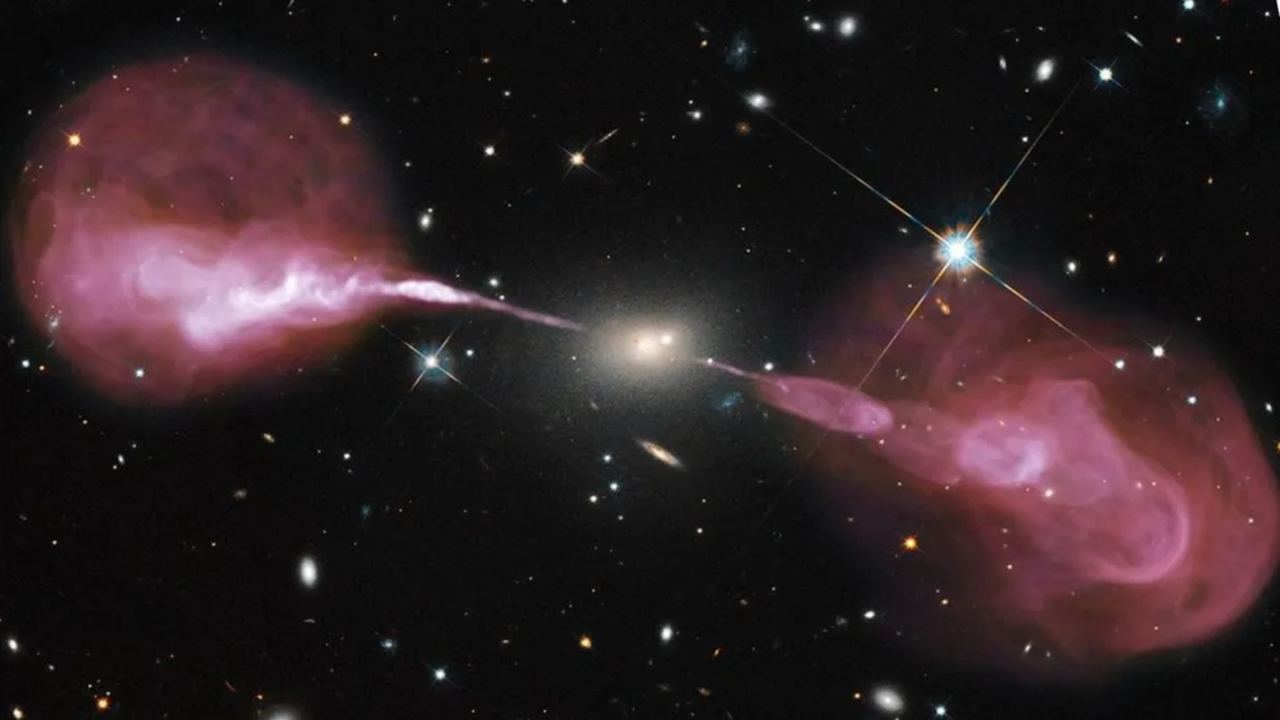
Astronomers have identified what may be a "black hole star"—a black hole enveloped in extraordinarily dense and luminous gas—in observations from the James Webb Space Telescope. The research, published in Nature on Wednesday, focuses on a distant object detected as the universe was just 660 million years old.
The object, designated MoM-BH*-1, appears as a bright reddish spot in the early universe. Researchers said the phenomenon emits about 100 billion times more energy than any star could produce through nuclear fusion. The object also exhibits an unusual pattern in which part of its light abruptly disappears, an effect scientists said is too intense to be explained by normal stellar behavior.
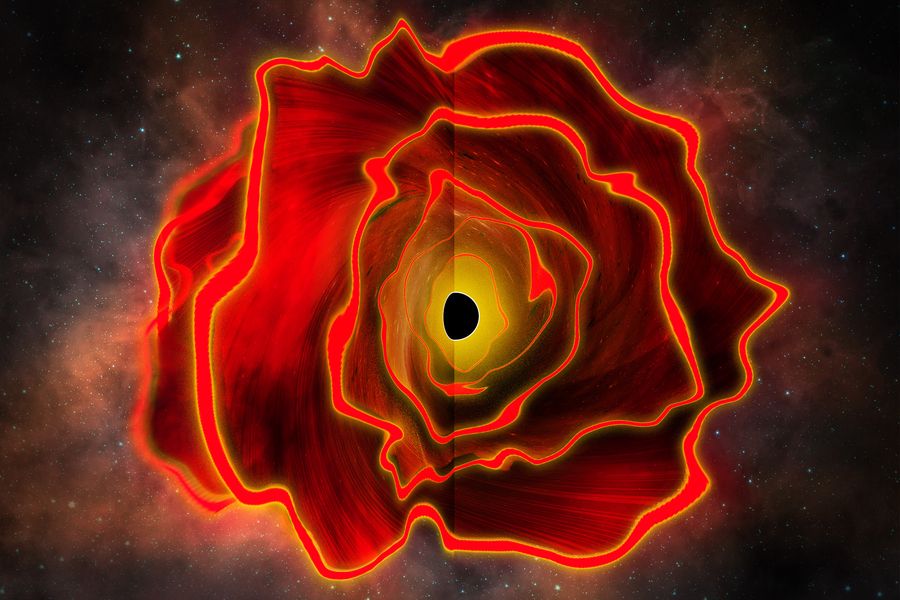
Scientists believe the signal originates from a black hole at the center of the object, devouring matter and releasing enormous energy. A massive gas envelope surrounding the black hole would absorb and scatter this energy before it escapes into space, giving the object some characteristics of starlight, the team said. The hypothesis could help explain a broader mystery uncovered by the James Webb telescope: the frequent appearance of small red spots in the early universe whose origins remain uncertain and do not fit conventional categories of deep-space objects.