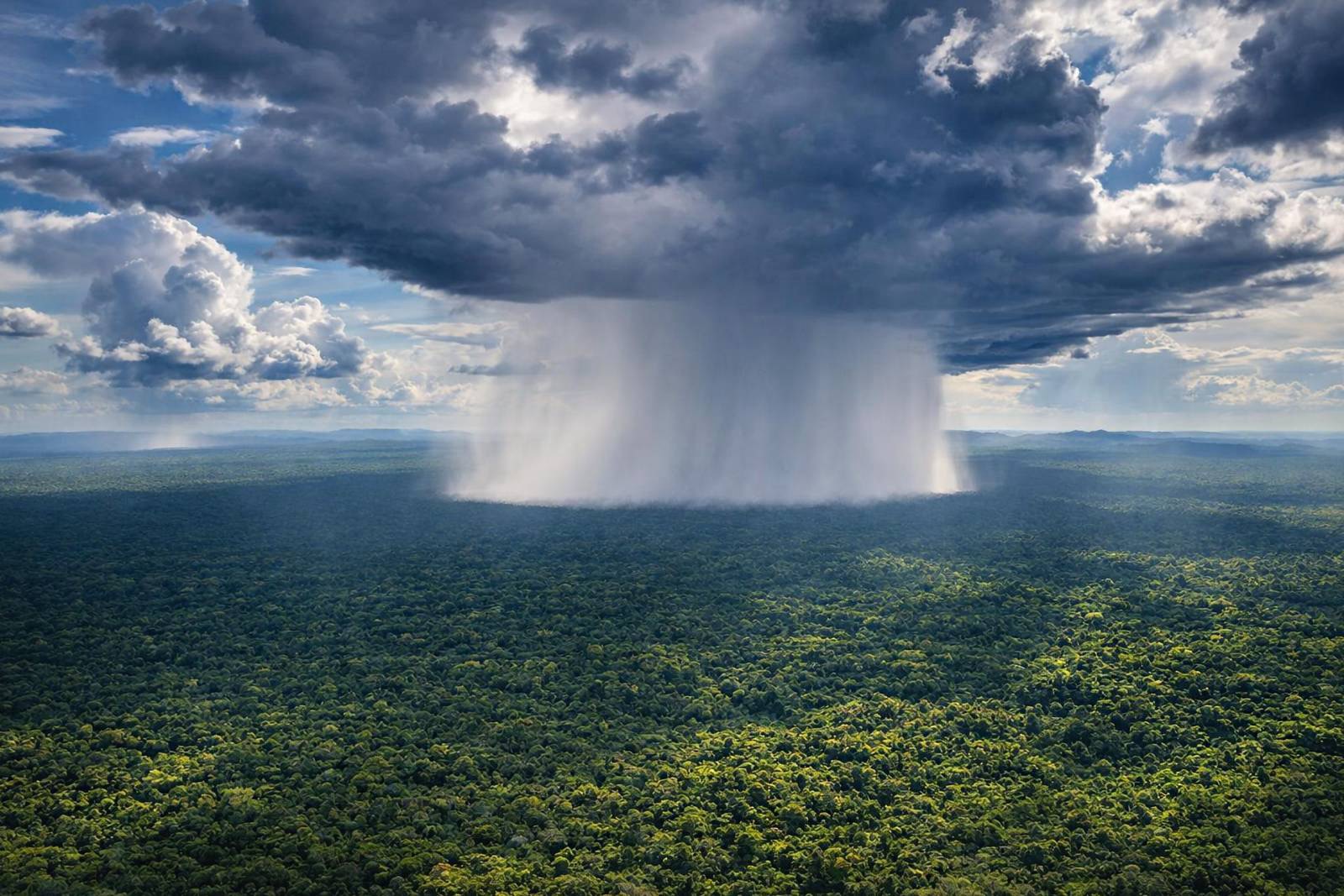
Scientists have debated for decades how deforestation, climate change and fires would transform the Amazon and when that transformation would occur. A series of studies published in 2026 provides new projections about the future of the rainforest from different perspectives.
A study published in Nature in April showed that the Amazon recovers faster than expected from extreme events, although complete recovery of its biodiversity takes longer. An analysis in PNAS also published in April, based on two decades of research, concluded that the forest is more resilient to fires than anticipated and shows no signs of transition to savanna. However, researchers warned that new ecosystems that emerge from the recovery process are more vulnerable to future climate disturbances.
In May, another article in Nature examined the impacts of deforestation and concluded that increased droughts could push the biome to a tipping point by 2040. According to Bernardo Flores, forest researcher at the Federal University of Santa Catarina and co-author of the May study, that tipping point exists because of the interaction between climate, tree cover and moisture, factors that most models do not fully consider.
Flores stated that the main degradation factors—droughts, selective logging, forest fragmentation and fires—could mean that the region is already "at the brink of the point of no return". The Amazon Environmental Research Institute recorded a 74 per cent decrease in rainfall over the past 35 years through 2025. Since the 1980s, temperatures in the Amazon have risen at twice the global average rate, increasing by 0.5 degrees Celsius per decade.
Luciana Gatti, lead researcher at the Brazilian space agency, noted that the Amazon climate has already changed enough that trees typical of the tropical rainforest cannot find the conditions necessary to survive. She explained that approximately half of the rainfall in the Amazon comes from tree transpiration, so fewer forests means less rain and more heat.
The April studies presented an encouraging scenario about the Amazon's capacity for recovery, showing that the forest regenerates faster and with greater diversity following extreme events. Flores noted that the large-scale PNAS analysis on the impacts of fire is one of the most important experiments conducted on the subject, with surprising results about resilience.
However, Flores explained that this recovery does not reflect the overall health of the biome. Regrowing forests are increasingly flammable and the species that compose them tend to be fast-growing generalists, replacing fire-resistant specialist trees. Larissa Amorim, forest engineer at the Brazilian conservation organisation Imazon, noted that historically fires were not part of the Amazon's natural dynamics, but consecutive years of extreme drought have allowed them to reach unprecedented scales.