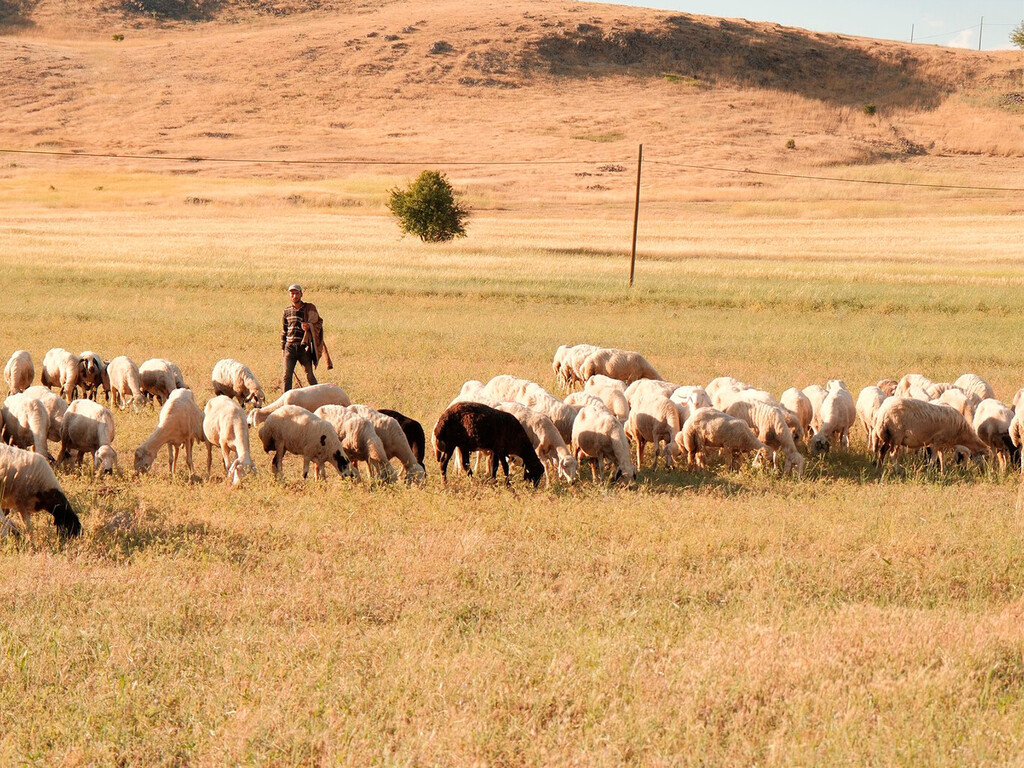
In La Rioja, extreme temperatures are changing work schedules in the agricultural sector. Livestock farmers like Miguel Ángel, a shepherd in Galilea, wake up at five in the morning to take sheep to pasture before the heat becomes unbearable. The herd sets the limit for the working day: when the animals seek shade on their own initiative, the shepherd returns to the fold.
The region has recorded days of 36 and 37 degrees Celsius, approximately nine degrees above historical averages. This thermal change has completely reconfigured the agricultural calendar. In San Asensio, viticulturist Santiago Sodupe enters the vineyard at five in the morning with four or five litres of water. In Ausejo, Jesús Fernández Ocón brings forward the barley harvest to one in the afternoon.
The impact of heat stress is both physiological and economic. Dairy cows suffer stress starting from 25 degrees, and many European farms have reported declines of between 10% and 15% in milk production. In Spain, sheep milk production fell 6.5% and goat milk production fell 10.8% compared to the previous year. Extreme heat reduces the animal's productive capacity beyond any protective measure.
Behind this immediate crisis lies a structural trend that is making it worse. Spain loses 520 sheep and 82 grazing goats every day. In the last decade, nearly two million sheep and 300,000 goats have been lost. Lack of profitability and the absence of generational renewal are the main causes, while extreme heat acts as an accelerant. Transhumance, the most traditional form of livestock farming, has contracted drastically: the White Paper on Transhumance counted 8,393 transhumant farmers in 2010-2011, a figure 80% lower than in the nineteen-nineties. Today fewer than 180 operations remain on Spanish livestock trails.
The cereal sector is also facing significant losses. The June heat wave cost the European agricultural sector two billion euros, with Spain losing 1.4 million tonnes of cereal and approximately 276 million euros, according to calculations by the Energy and Climate Intelligence Unit. The 2026 national cereal harvest was around 18.5 million tonnes, well below the average of the last five years, with declines of 35% in Castilla and León, 49% in the Madrid region and 24% in Andalusia.